Navigating Van Nuys Airport Airspace During Flight Training
Published by:
Anthony N.
Published on:
Read time:
6 min read
Van Nuys Airport (VNY) is famous worldwide as the busiest general aviation airport on the planet. With over 230,000 annual operations, it serves as the ultimate training ground for Southern California aviators.
For many students looking to learn to fly in Van Nuys, the thought of sharing runways with corporate jets and communicating with a busy control tower can feel intimidating. Airspace and radio anxiety are common friction points. However, mastering VNY’s environment does not require superhuman abilities. With our structured instruction, state-of-the-art simulator, and professional guidance, you will transform this complex airspace into a powerful asset that builds elite piloting skills.
The Structure of Van Nuys Airspace (Class D)
Van Nuys Airport sits beneath a cylinder of Class D airspace that extends from the surface up to 2,500 feet Mean Sea Level (MSL).
- Airspace Limits: This airspace is active 24/7, requiring two-way radio communication with the VNY control tower before entry.
- Visual Reference Points: Landmarks like the Sepulveda Basin, the visual corridor along the 405 freeway, and the hills surrounding the San Fernando Valley act as natural entry and exit gates.
- Complex Neighbors: Directly above VNY is the Los Angeles Class B airspace (associated with LAX), and to the east sits Burbank’s Class C airspace.
Learning to navigate this layered environment during your van nuys flight training ensures that you build high-level situational awareness from your very first flight hour.
Overcoming Radio Anxiety: The Step-by Step Method
We recognize that talking to Air Traffic Control (ATC) is one of the biggest hurdles for new pilots. To ensure you build confidence without wasting expensive flight hours in the air, we use a structured training methodology:
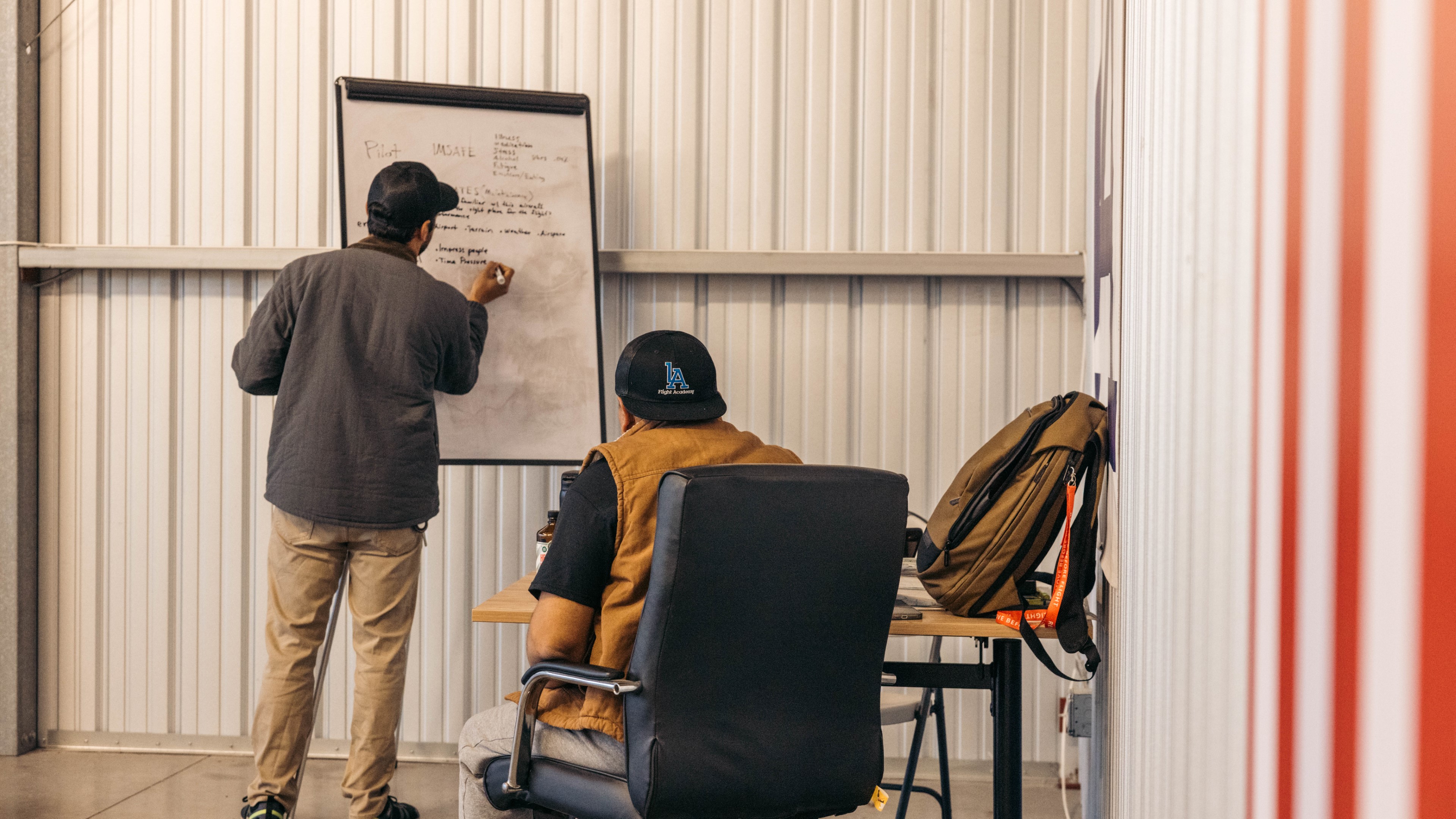
- Interactive Ground School: Your instructor will break down radio phraseology into clear, predictable scripts so you know exactly what to say and what to expect in response.
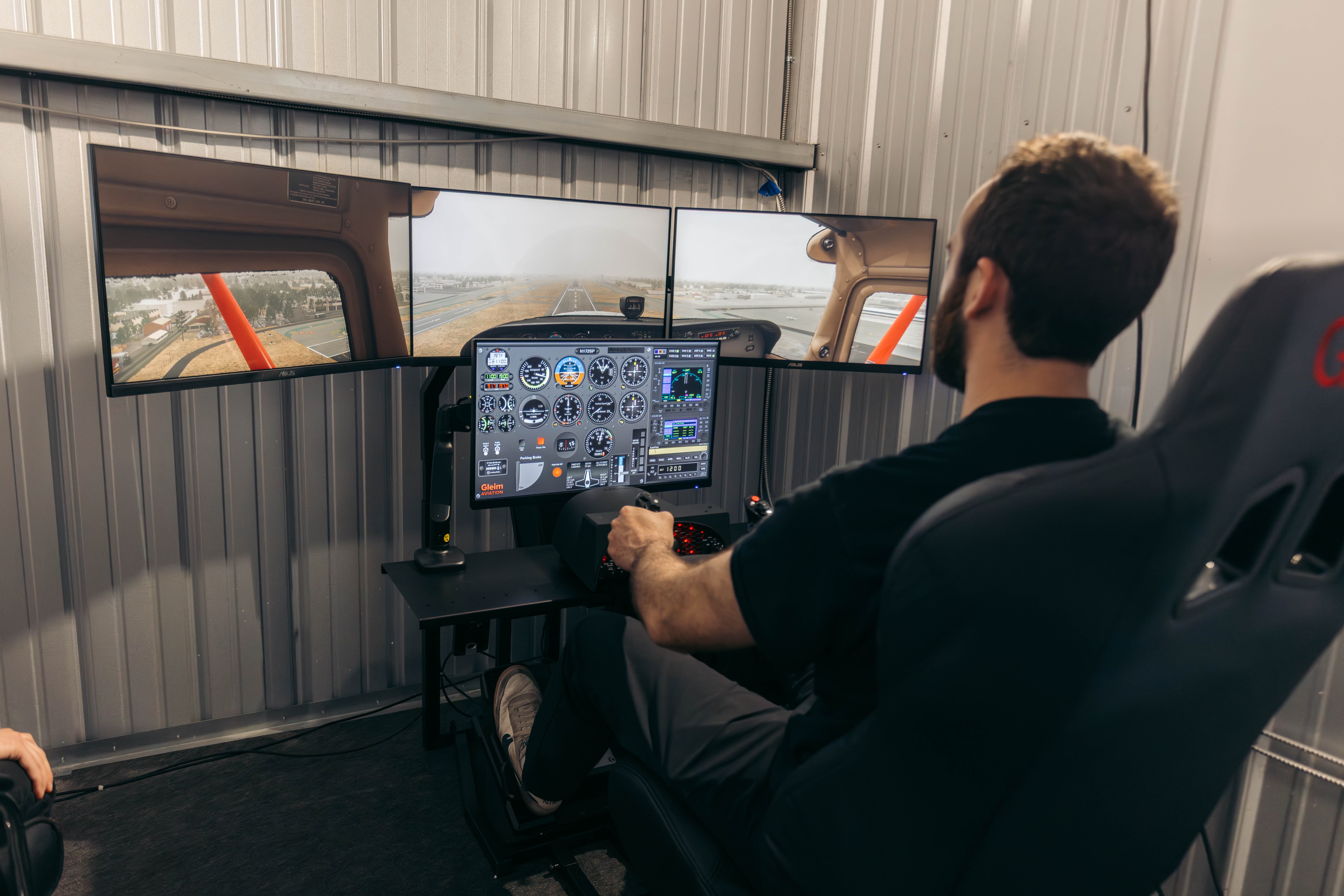
- Gleim BATD Simulator Training: Practice ATC communication and airport arrivals in our FAA-approved simulator ($70/hour, or $60/hour block). You can log up to 2.5 hours of simulator time toward your Private Pilot License, saving you significant aircraft rental costs.
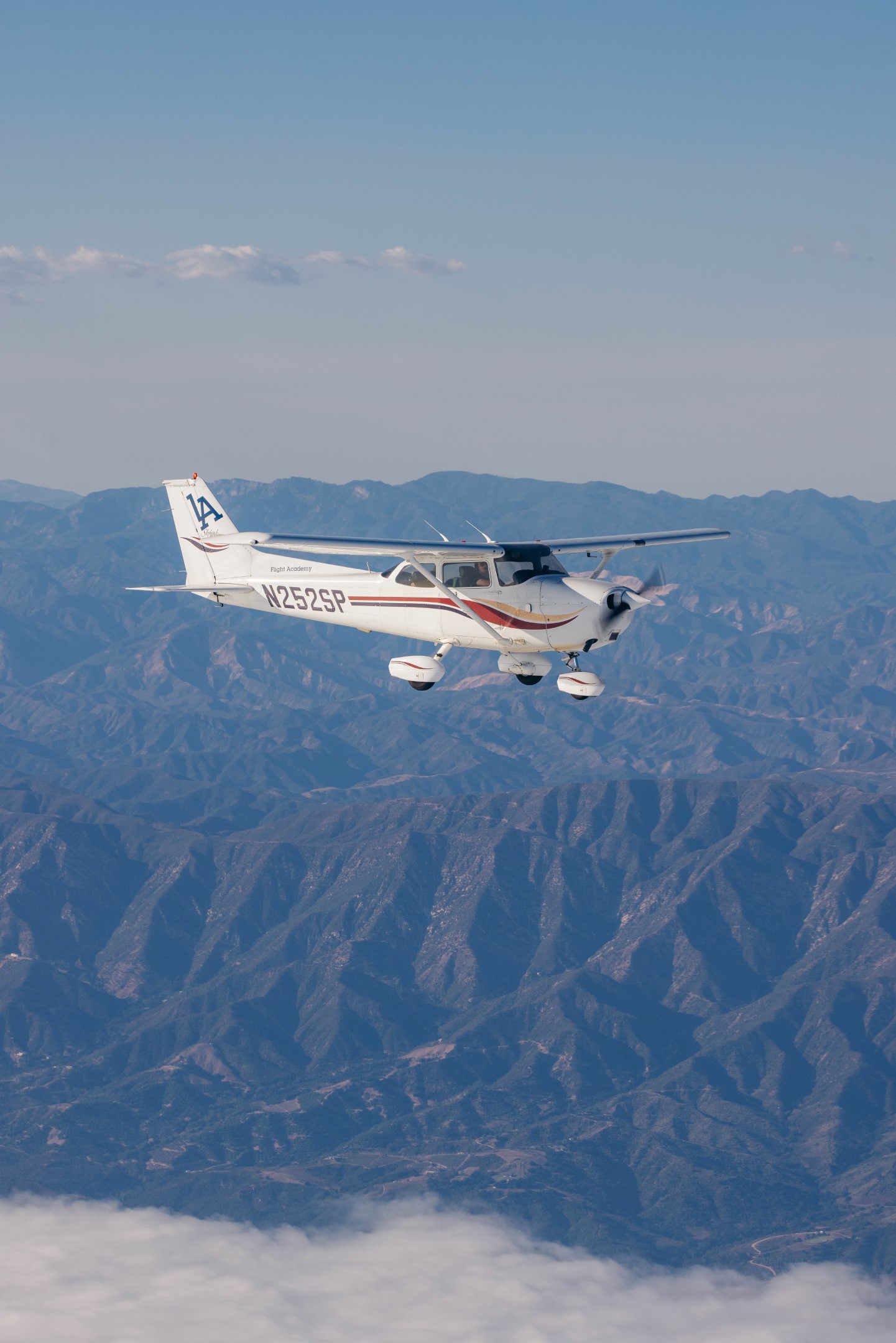
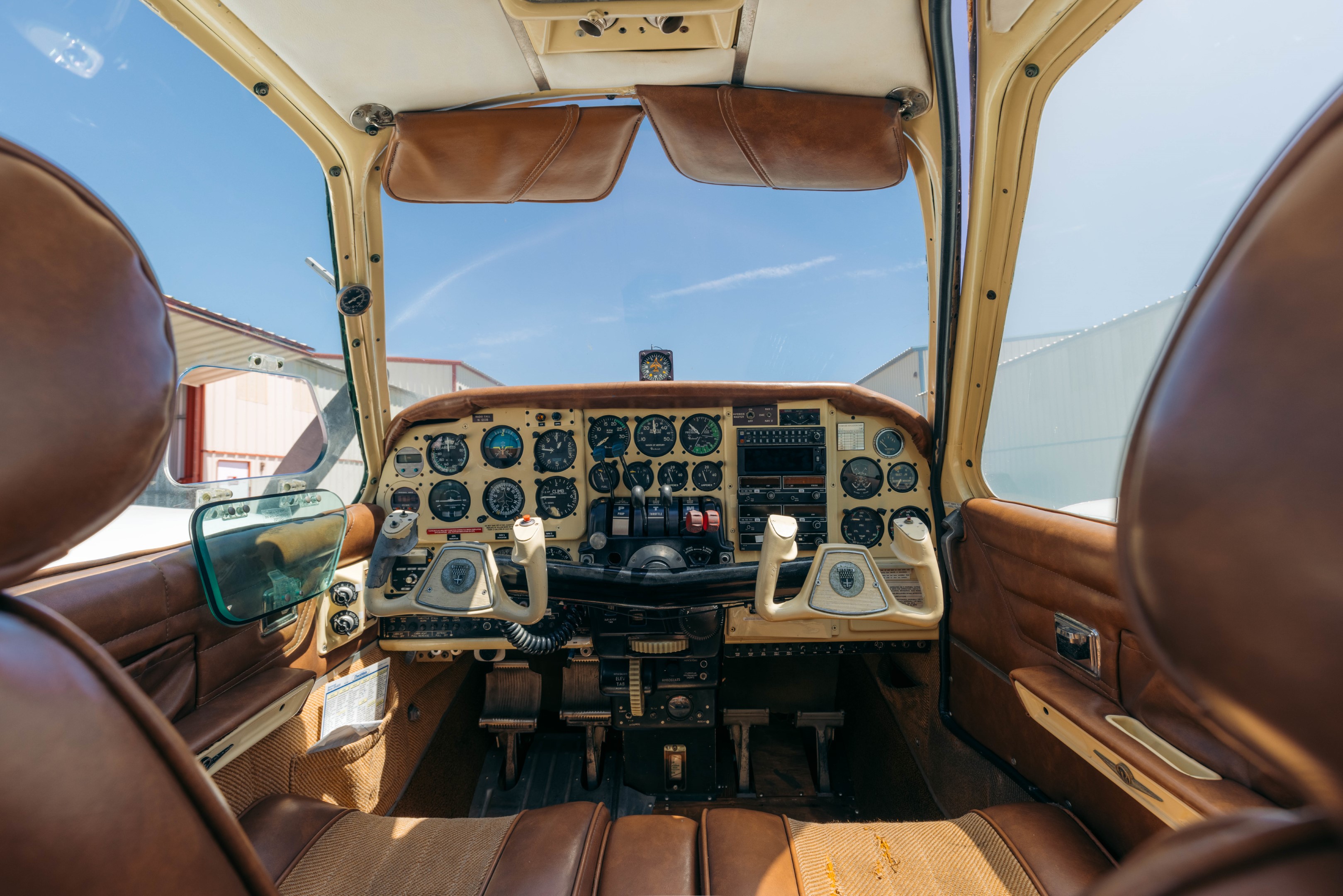
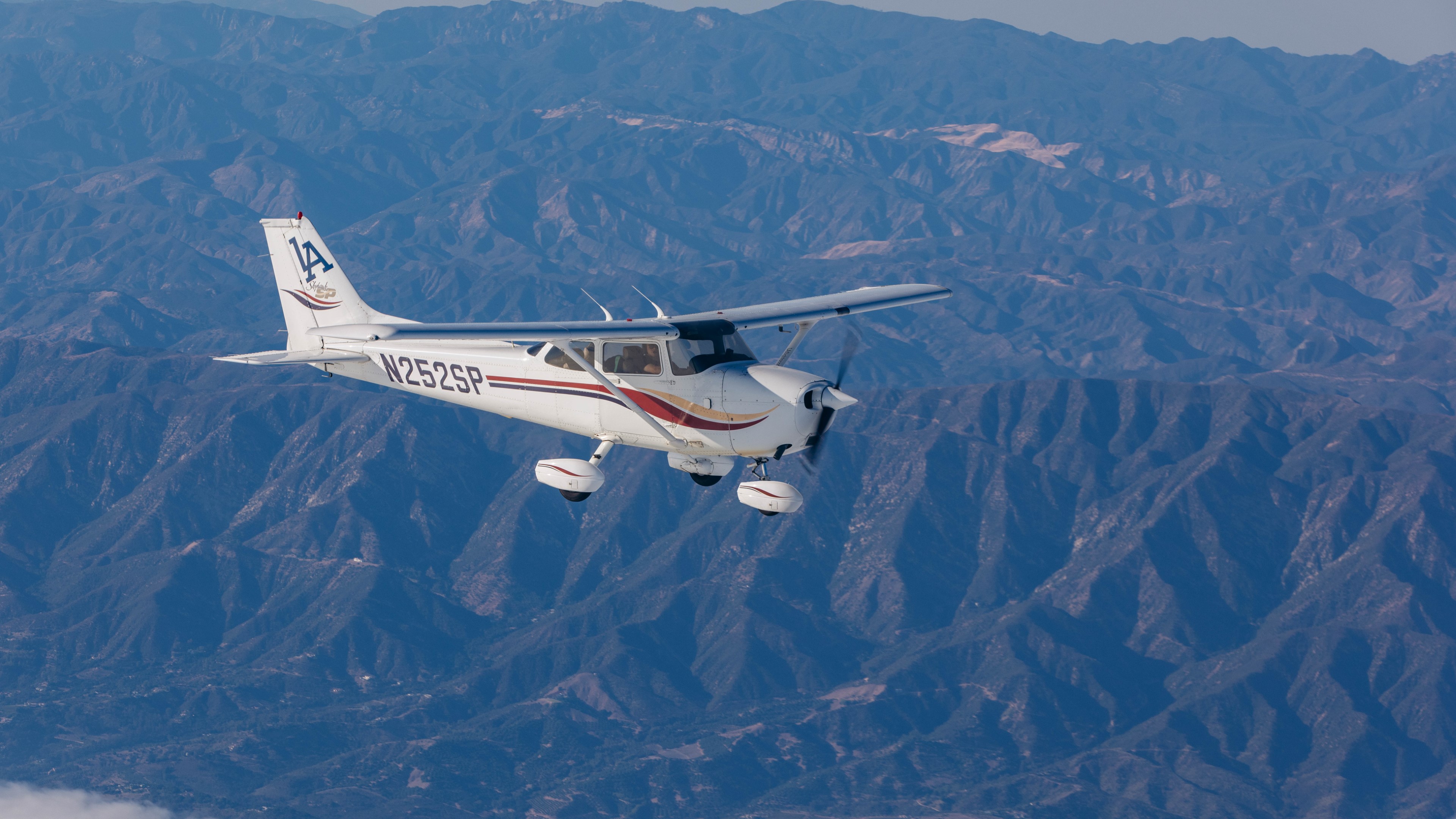
- Cockpit Integration: When you take the controls of our training aircraft (such as our Cessna 172S at $185/hour wet), your instructor handles the radio until you feel ready to take over.
The Geographic Advantage of VNY Flight Training
Consistent practice is key to mastering pilot skills. Thanks to Southern California’s 300+ VFR days per year, training weather is rarely an issue. When you depart VNY, you have instant access to diverse practice environments:
- The Coastal Practice Area: Perfect for practicing basic flight maneuvers over the Malibu coastline and Venice Beach.
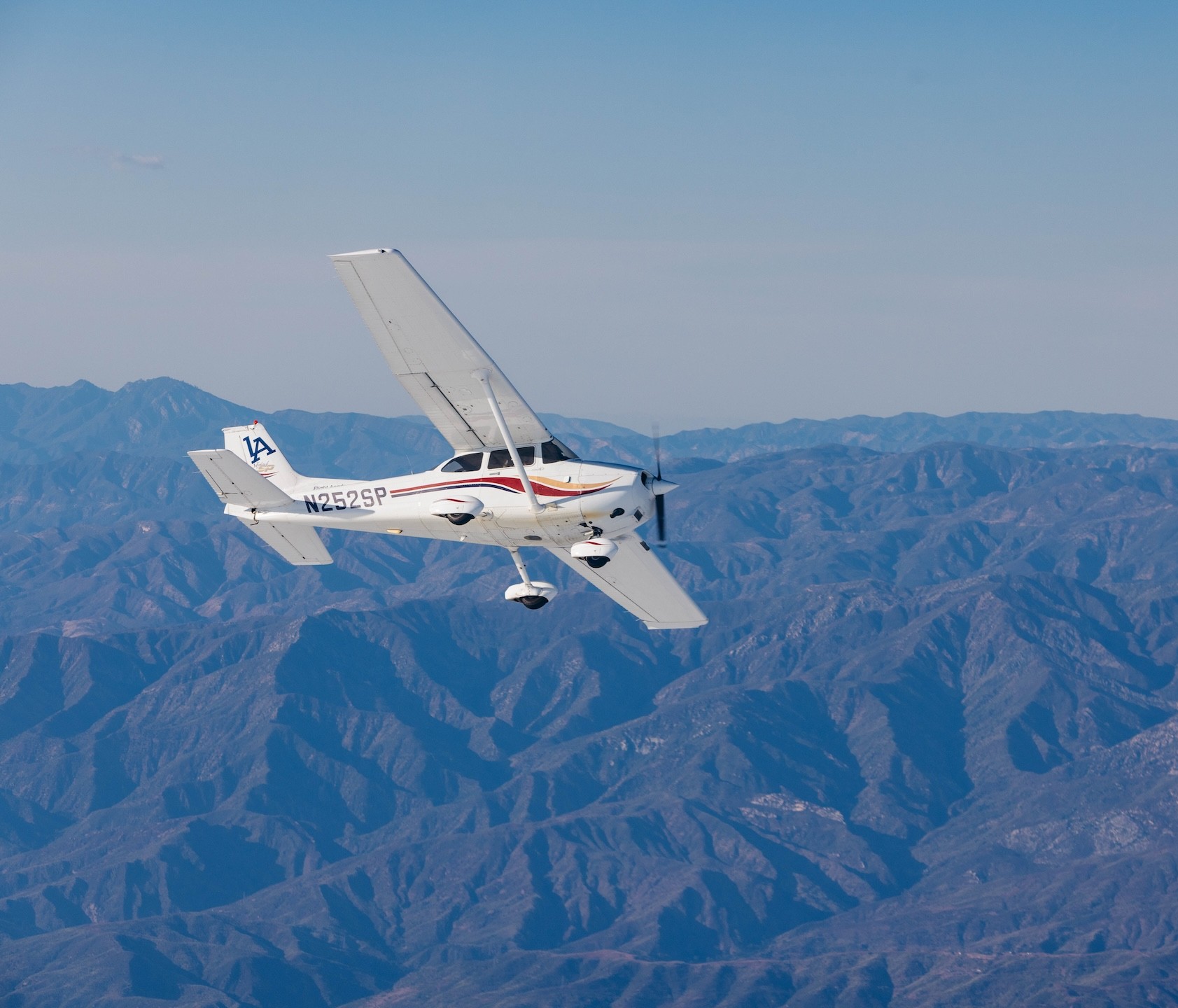
- Mountain Training: Fly over the San Gabriel Mountains to practice high-altitude operations and mountain airport landings.
- Desert Operations: Climb over the ridge to the Antelope Valley and Mojave Desert for wide-open airspace and cross-country practice.
Why VNY Graduates Are More Competent Pilots
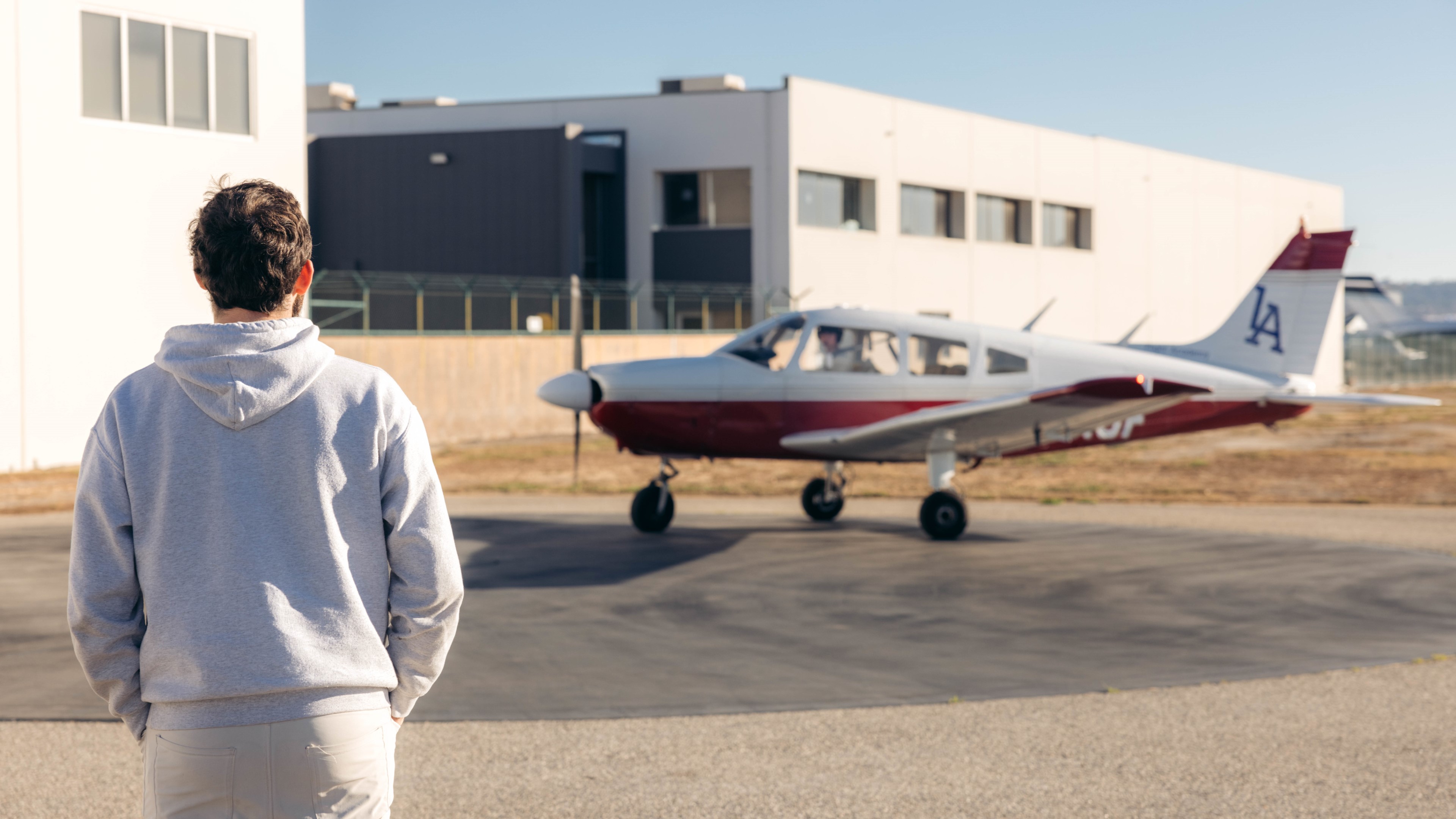
Training at a quiet, uncontrolled airport might feel easier initially, but it leaves you unprepared for real-world flying. Because our students interact with jet traffic, dual parallel runways, and complex airspace boundaries daily, they build superior aeronautical decision-making skills.
Our 100% checkride pass rate and over 1,000 successful graduates are direct proof of our methods. When you pass your checkride in Los Angeles, you possess the credentials and confidence to fly anywhere in the world.
If you are ready to take control of your training, check out our Flying Lessons Van Nuys FAQ to learn more about our fleet, or visit our financing page to learn how partners like Stratus Financial make pilot training accessible.