Earning Your Pilot Wings in Los Angeles Airspace

Published by:
Anthony N.
Published on:
Updated on:
Read time:
8 min read
The headset goes on, the ramp comes alive, and the radio begins moving faster than ordinary conversation. For a beginner, earning your pilot wings in Los Angeles airspace can sound like starting on aviation’s hardest setting. The reality is more encouraging: you learn with an instructor, one task at a time, and the environment becomes part of the lesson.
At LA Flight Academy, your first flights are guided practice. Training from Van Nuys Airport gives you repeated exposure to radio communication, taxi instructions, traffic awareness, and airspace planning while an instructor helps manage the workload. If you are still deciding whether flying fits you, our beginner guide explains the first steps without asking you to arrive as a pilot.
The work begins before you call the tower
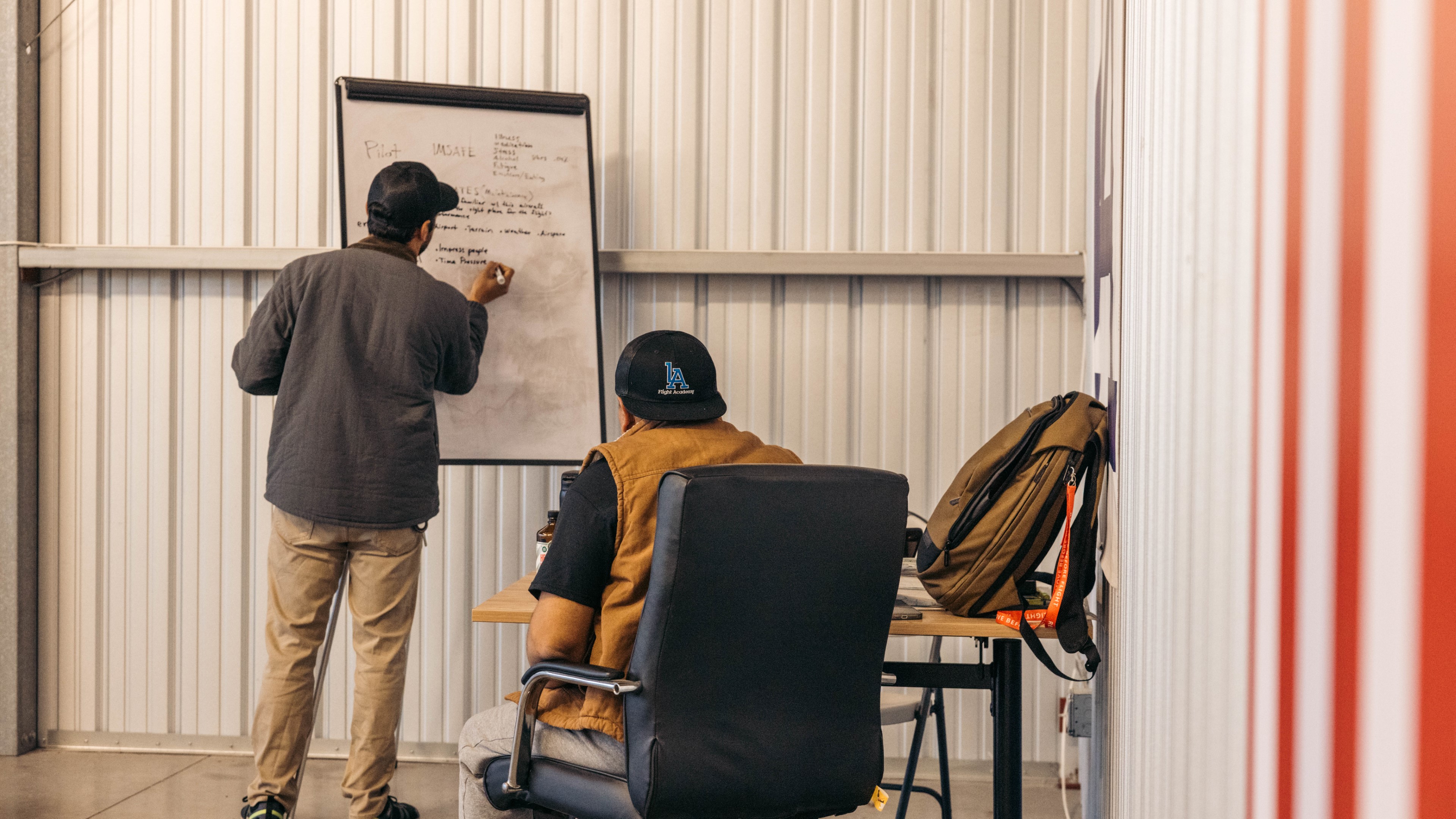
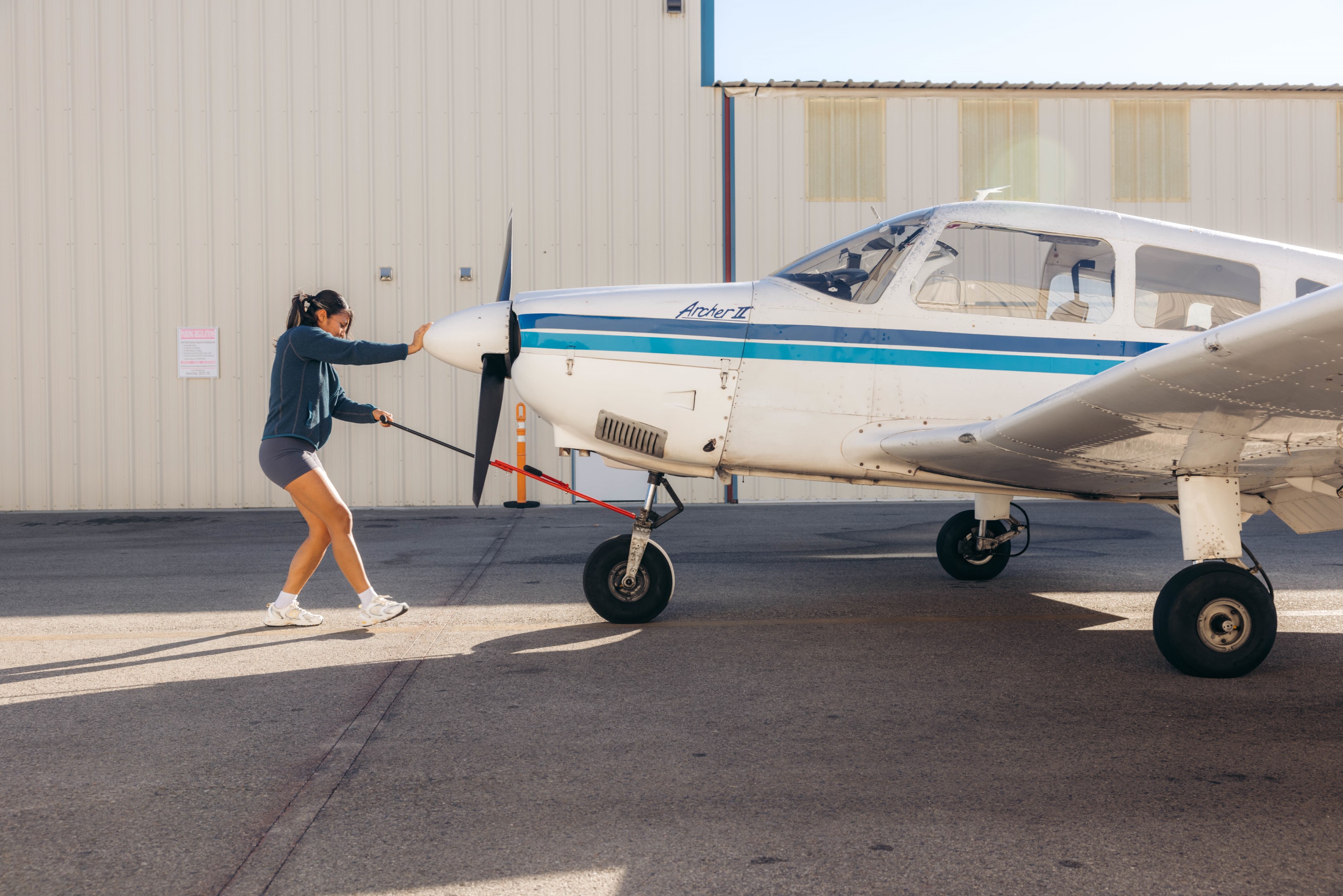
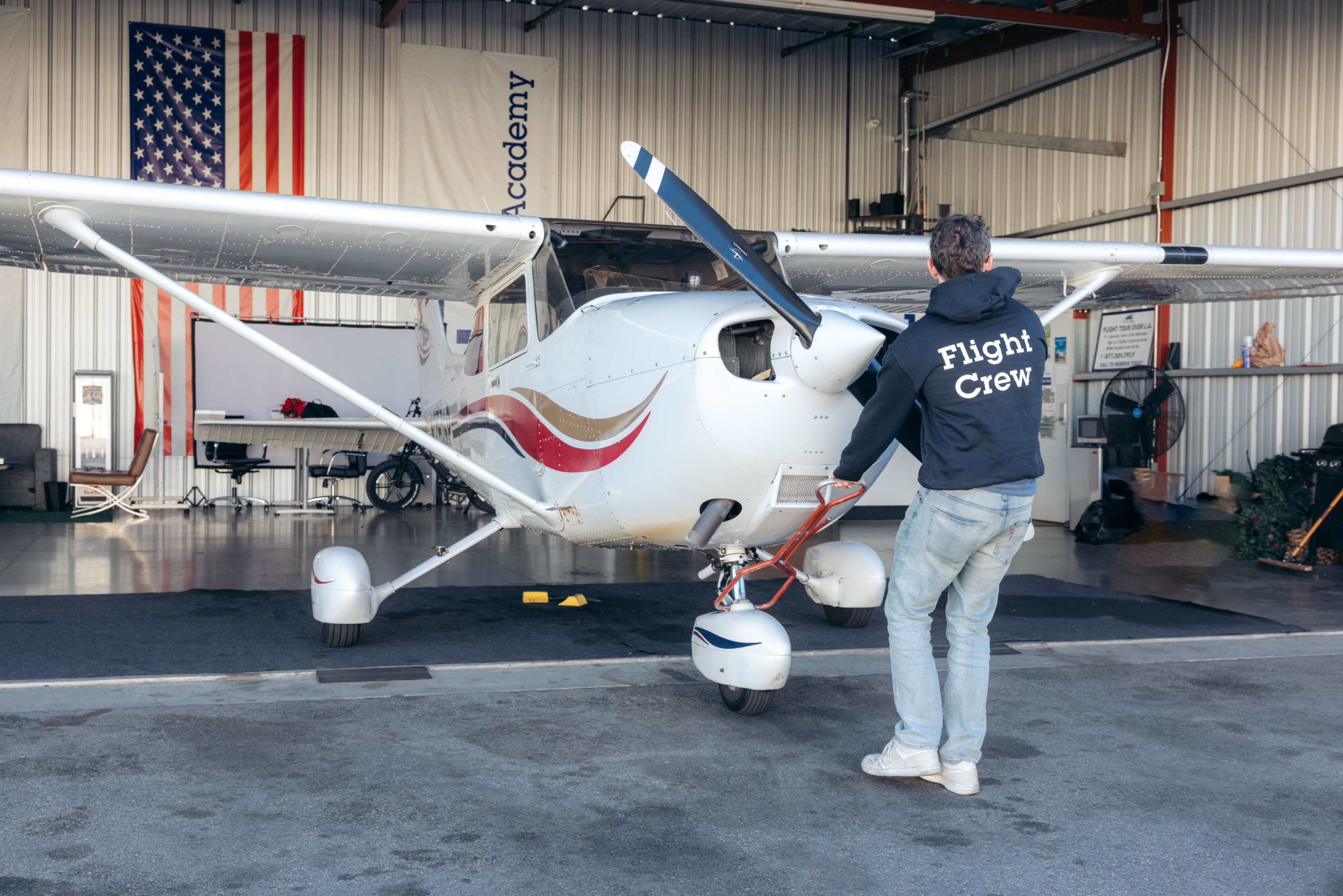
Good flying starts on the ground. During the preflight walkaround, you learn to inspect the aircraft, review the weather, understand the planned route, and identify the decisions that will matter after takeoff. Those habits turn a busy airport from a blur of motion into a sequence you can prepare for. You can preview that environment in our Van Nuys training guide.
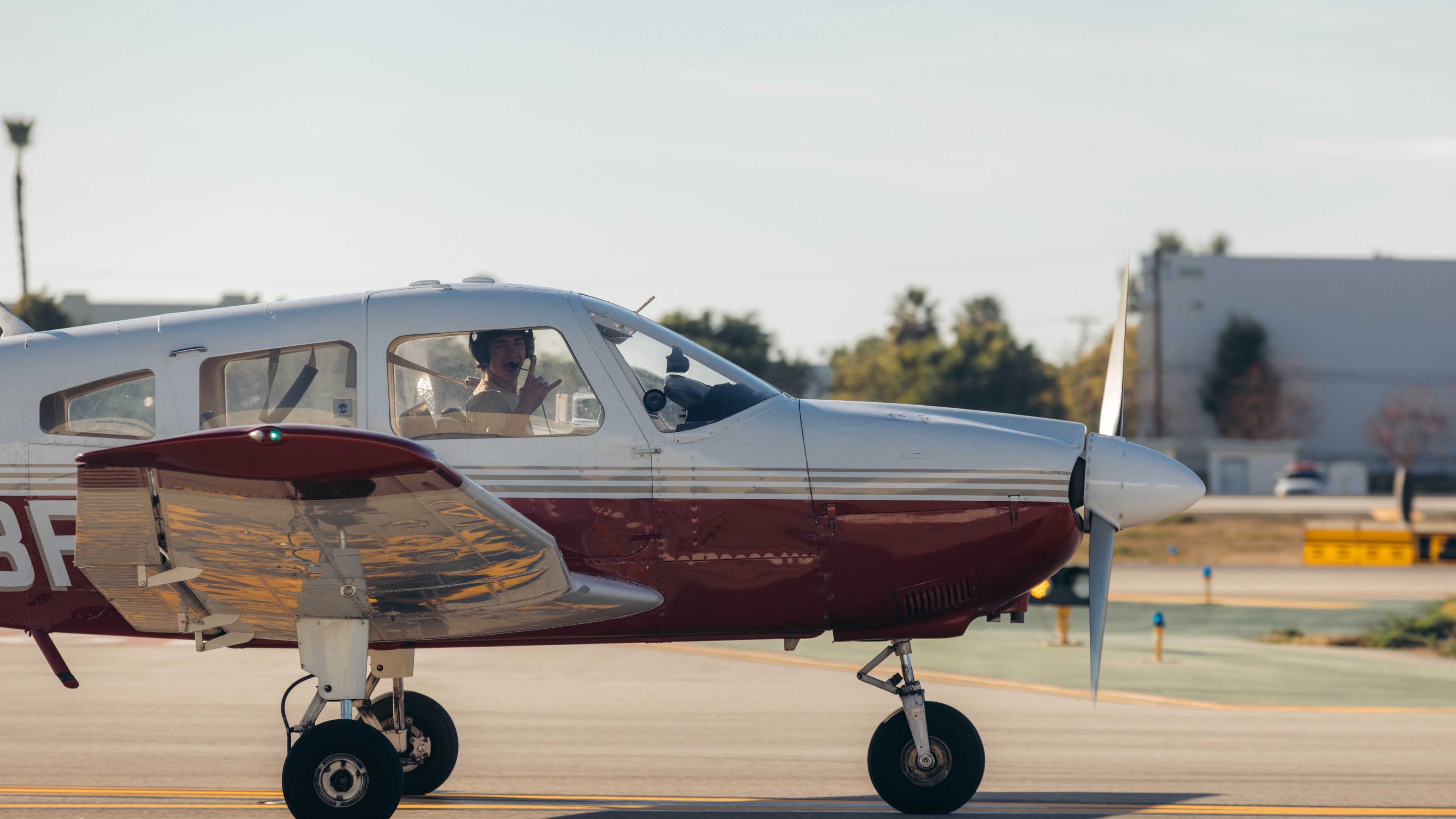
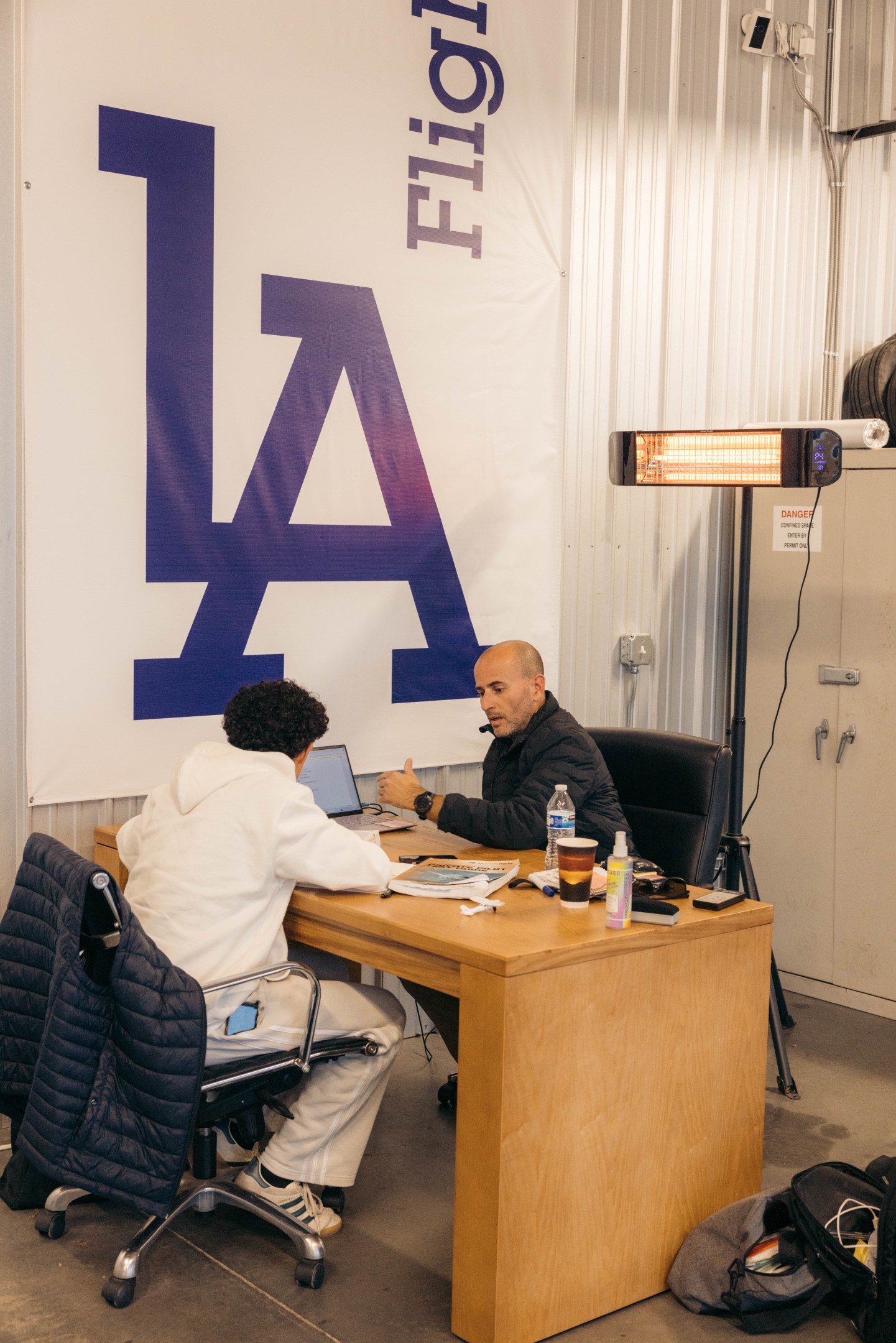
Radio work follows the same pattern. Your instructor can explain the likely call, help you rehearse it, and handle communication when your attention needs to stay elsewhere. As your capacity grows, you take on more of the exchange. A first call may feel fast. With repetition, you begin hearing a predictable structure: who you are calling, who you are, where you are, and what you need.
This progression is valuable because cockpit attention is limited. A beginner may be controlling pitch, scanning for traffic, following a taxiway, and listening for a call sign at the same time. Training teaches you to prioritize, prepare early, and ask for clarification when needed. Our guide to navigating Van Nuys airspace gives additional context for the radio and airspace skills involved.
Los Angeles turns the map into a practical lesson
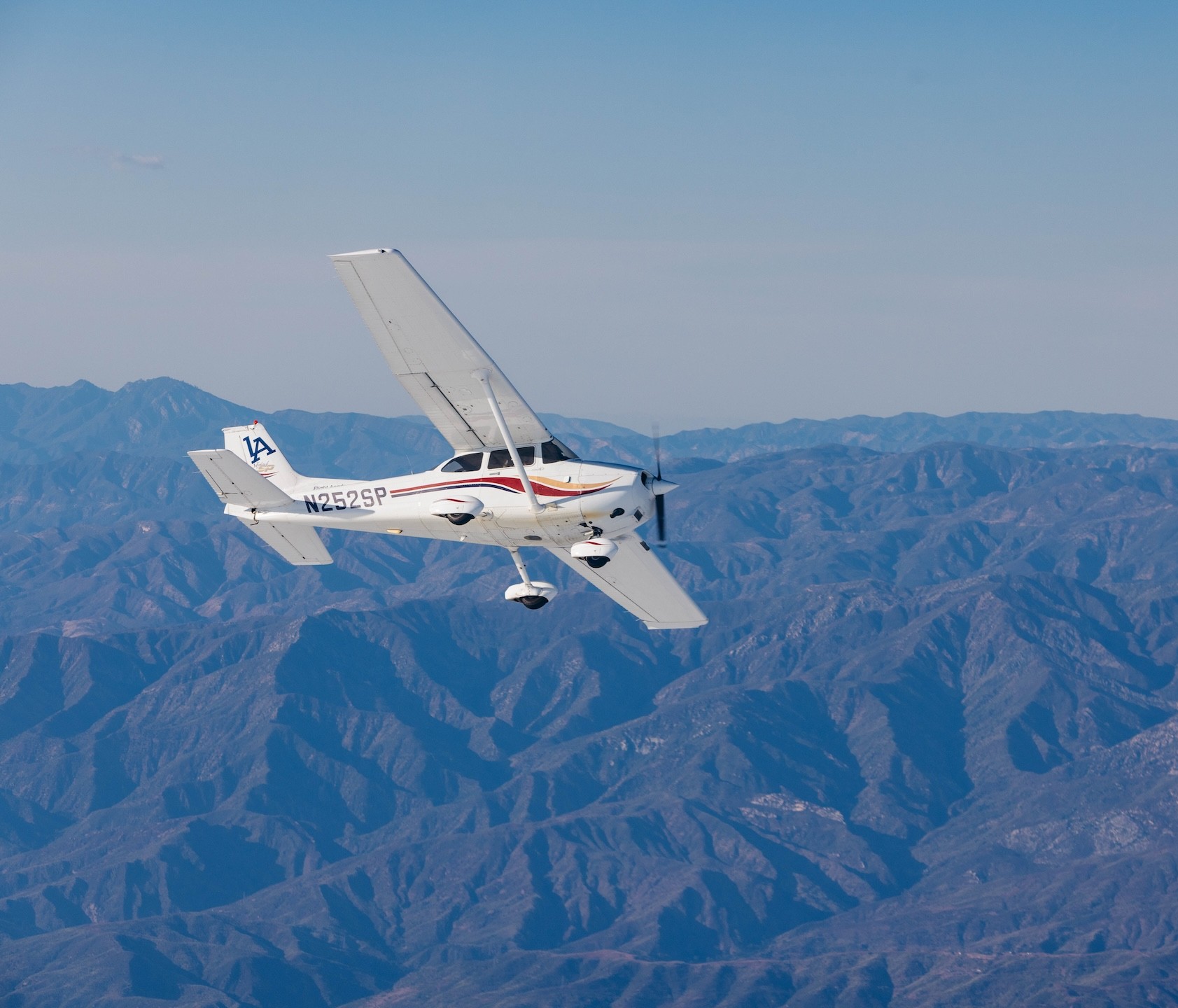
Los Angeles is surrounded by airports, terrain, and multiple classes of airspace. Before a flight, those layers become a planning exercise: where can you fly, which boundaries matter, what communication is required, and where will the workload rise? The chart becomes a decision tool.
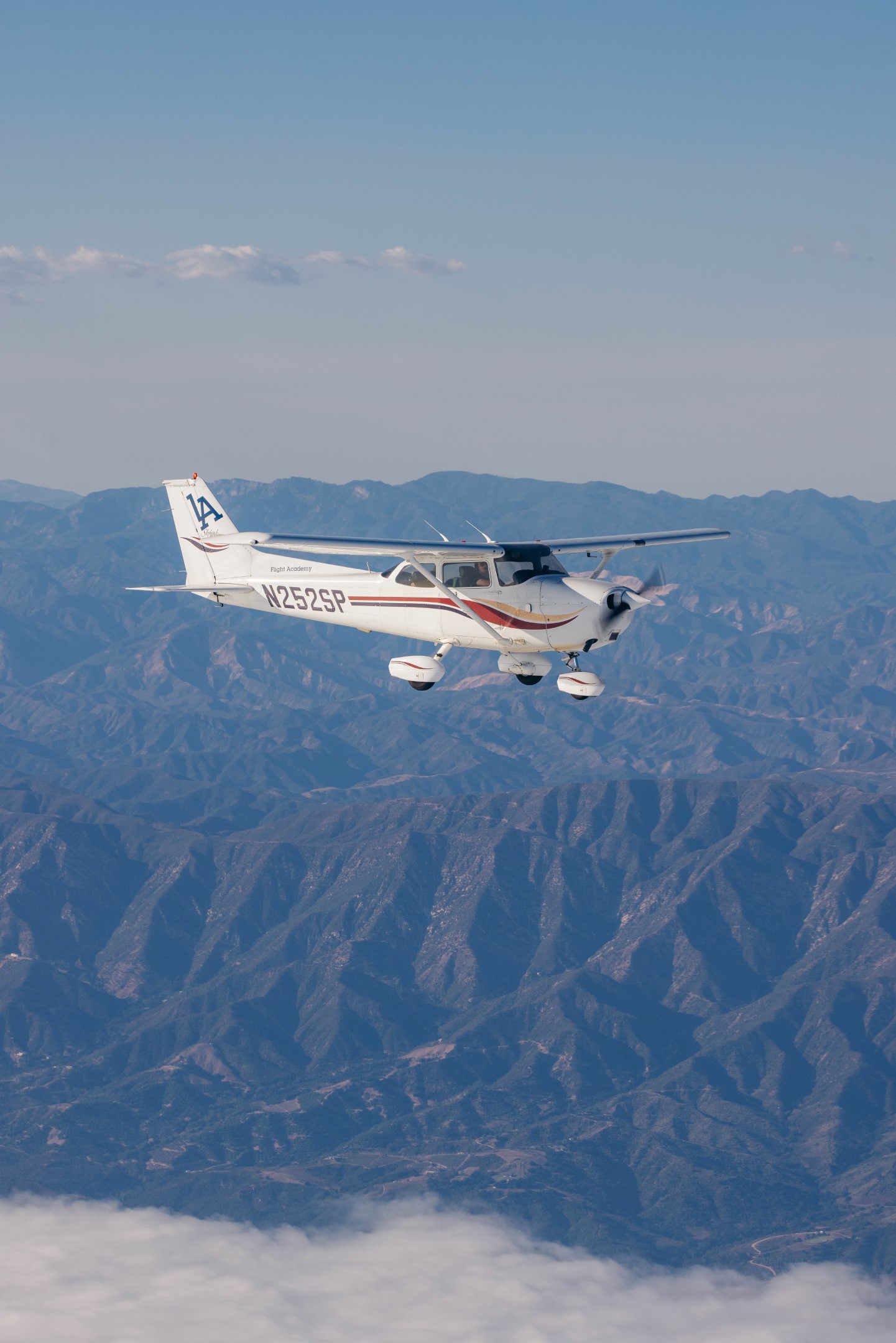
Your instructor introduces that complexity in manageable pieces. One lesson may emphasize straight-and-level control after departure. Another may focus on recognizing landmarks, maintaining altitude while listening to ATC, or preparing for an arrival before the cockpit becomes busy. Each flight has a defined learning purpose, even when the view stretches from the city toward the mountains or coast.
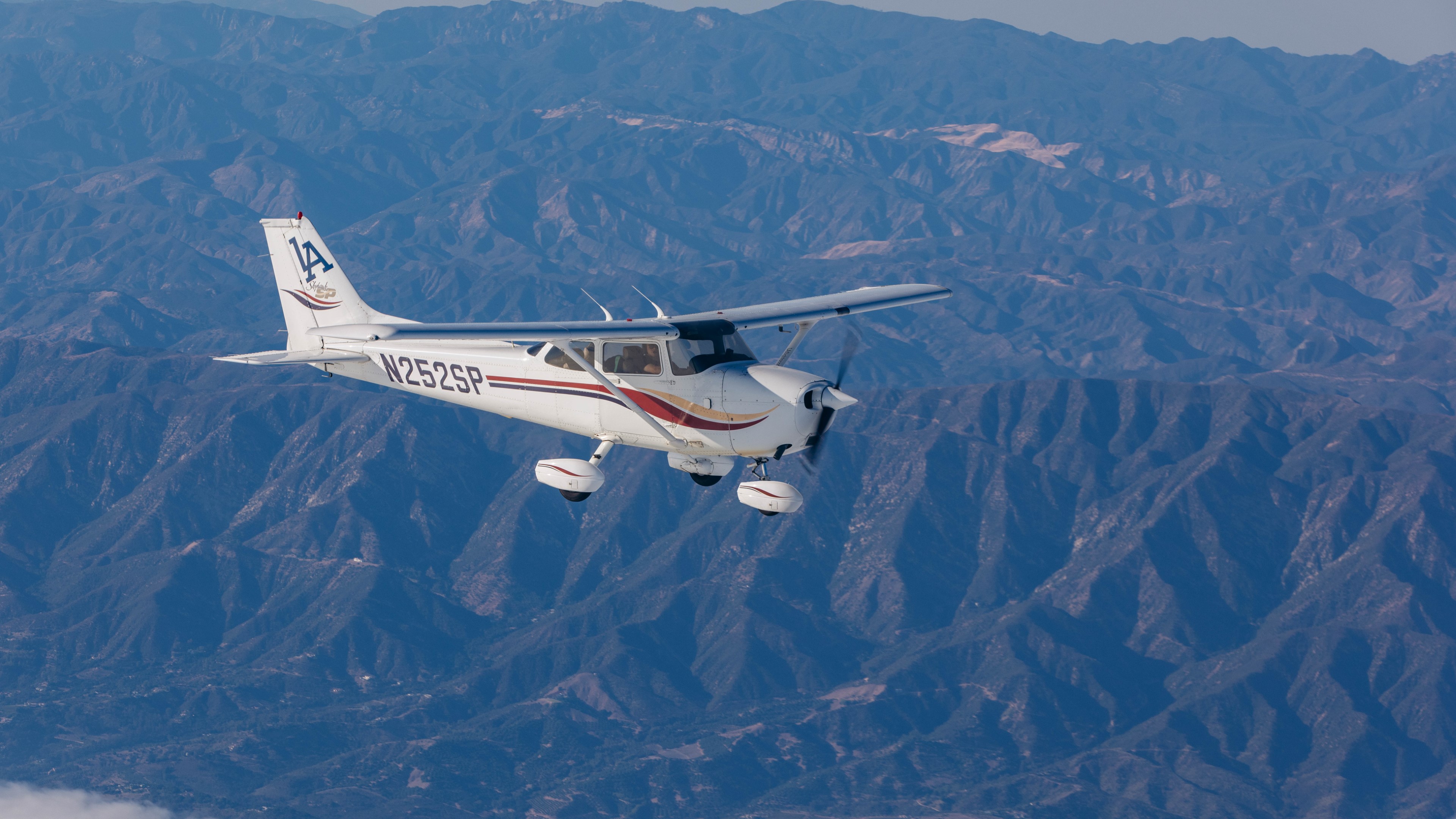
The goal is steady workload management. You learn to stay ahead of the airplane by reviewing frequencies before they are needed, anticipating the next clearance, and keeping an outside scan while maintaining aircraft control. These habits support flying well beyond Los Angeles because they are built around preparation and judgment rather than memorizing one route.
Your instructor builds independence in deliberate stages
You do not need a student pilot certificate simply to begin lessons with an instructor. Before solo flight, however, you will need the required student pilot certificate, training, endorsements, and demonstrated readiness. Solo is earned through proficiency, with your instructor deciding when you can safely perform the required operations on your own. The FAA student pilot guidance explains the certification step.
Medical certification should also enter the conversation early. Most students need an appropriate medical qualification before solo, although FAA-recognized alternatives and exceptions can apply to particular operations. Personal medical questions belong with an Aviation Medical Examiner, and the FAA medical certification resources are the right starting point.
For a Private Pilot airplane single-engine path under Part 61, the FAA minimum is 40 hours of flight time, with specific experience requirements. That number is the regulatory floor. Actual completion time varies with proficiency, training frequency, weather, aircraft and instructor availability, and individual learning needs. Our Private Pilot course shows how ground knowledge, dual instruction, solo work, cross-country training, and checkride preparation fit together.
Consistency gives complex airspace time to become familiar
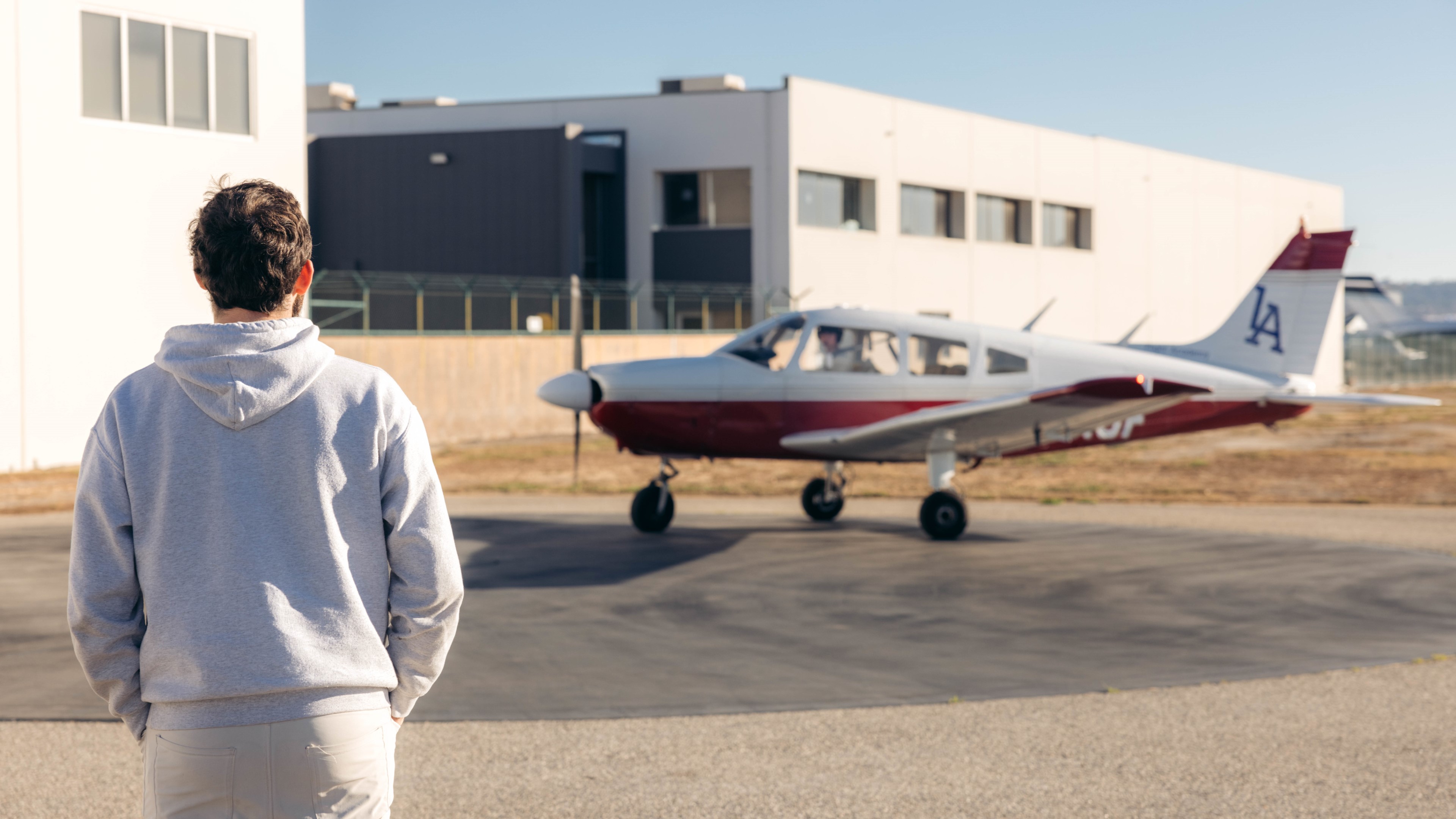
Skills fade when lessons are spaced too far apart. A workable schedule lets you return while the last radio call, landing correction, and debrief are still fresh. Consistency reduces relearning, so more of the next lesson can move your skills forward. Your ideal frequency depends on your availability, budget, and training plan.
That planning includes the financial side. Flight training costs vary with aircraft, instructor time, ground instruction, testing, and the hours you need to reach proficiency. Build a realistic training budget before committing to a pace that is difficult to sustain. We provide financing information for students who want to explore funding options, with approval and terms determined through the applicable provider.
Preparation between flights also protects momentum. Chair-flying a traffic pattern, reviewing a radio script, studying the next maneuver, and arriving ready for the lesson all help you use cockpit time well. Progress comes from the full training rhythm: preparation, flight, feedback, and focused practice before you return.
“Pilot wings” become a series of measurable milestones
The phrase sounds like one dramatic finish, but earning your pilot wings over Los Angeles happens through smaller wins. You complete a careful preflight without prompting. You make a clear radio call. You hold altitude while scanning for traffic. You recognize when the cockpit is getting busy and create time to think.
Eventually, those skills support first solo, cross-country work, knowledge-test preparation, and the practical test commonly called the checkride. Each milestone has defined requirements, and your instructor connects them into a personal plan. If your goal is recreational flying, the Private Pilot certificate may be the destination. Career-minded students can use it as a foundation for later ratings and certificates while treating employment as a separate qualification and hiring process.
The environment may feel demanding at first. That is exactly why the training is progressive. You are never expected to master Los Angeles all at once. You learn one procedure, one radio exchange, and one flight at a time until the workload that once felt unfamiliar becomes organized and manageable.
Frequently asked questions
Can I take a flight lesson before getting a student pilot certificate?
Yes. You can begin dual instruction before receiving a student pilot certificate. You need the certificate before you can solo, along with the applicable training and instructor endorsements. A Discovery Flight can help you experience the cockpit before deciding on a full program.
Is Van Nuys Airport too busy for a beginner?
No. Students train with instructors who introduce radio, taxi, traffic, and airspace tasks progressively. A towered airport can build ATC confidence through repetition, but the right environment also depends on your goals and learning preferences. Review the Van Nuys training environment before your visit.
Does busy-airspace training make someone a better pilot?
No airport guarantees a particular outcome. Active airspace gives you opportunities to practice specific skills, including communication, traffic awareness, planning, and workload management. Your proficiency still depends on instruction, preparation, consistent practice, and sound decision-making.
How soon can I fly solo?
There is no universal solo date. Your instructor must verify that you meet the applicable requirements and can perform the necessary operations safely. Readiness matters more than a calendar promise, so discuss your schedule and preparation habits when you review the Private Pilot training path.
Do I need an FAA medical before my first lesson?
You generally do not need a medical certificate merely to take lessons with an instructor. Students should address medical eligibility early because an appropriate medical qualification is needed before solo. Consult an Aviation Medical Examiner about your circumstances and use the beginner planning guide to organize the other first steps.
What should I do before choosing a training schedule?
Compare your weekly availability, study time, travel time, and budget. Choose a pace you can sustain, then discuss current instructor and aircraft availability directly with our team. You can also review flight training financing information before building your plan.
Put yourself in the left seat
Reading can explain the sequence, but the clearest decision comes from experiencing a lesson. A Discovery Flight lets you meet an instructor, see the Van Nuys environment, and feel how the airplane responds with guidance beside you.
Book a Discovery Flight with LA Flight Academy and take your first guided step into Los Angeles airspace.