What Happens After Your Discovery Flight: Your First 10 Hours
Published by:
Anthony N.
Published on:
Updated on:
Read time:
8 min read
The Discovery Flight is over. You held the controls somewhere over the San Fernando Valley, the instructor talked you through a turn, and now you are standing on the ramp at Van Nuys wondering what the next lesson actually looks like. Most beginners know the first flight is a taste. Few know what the first ten hours contain.
The plain answer from our team at LA Flight Academy: your early lessons follow a recognizable sequence built on the same skills every pilot learns first. Preflight inspection, taxi, radio basics, takeoff, the four fundamentals of flight, slow flight and stalls, ground reference maneuvers, and the traffic pattern. The order and pace shift with your progress, but the ingredients are consistent. This post walks through them so you know what your second visit to the airport holds. If you have not yet decided whether to start, the first post in this series, Am I ready to start flight training?, covers that question.
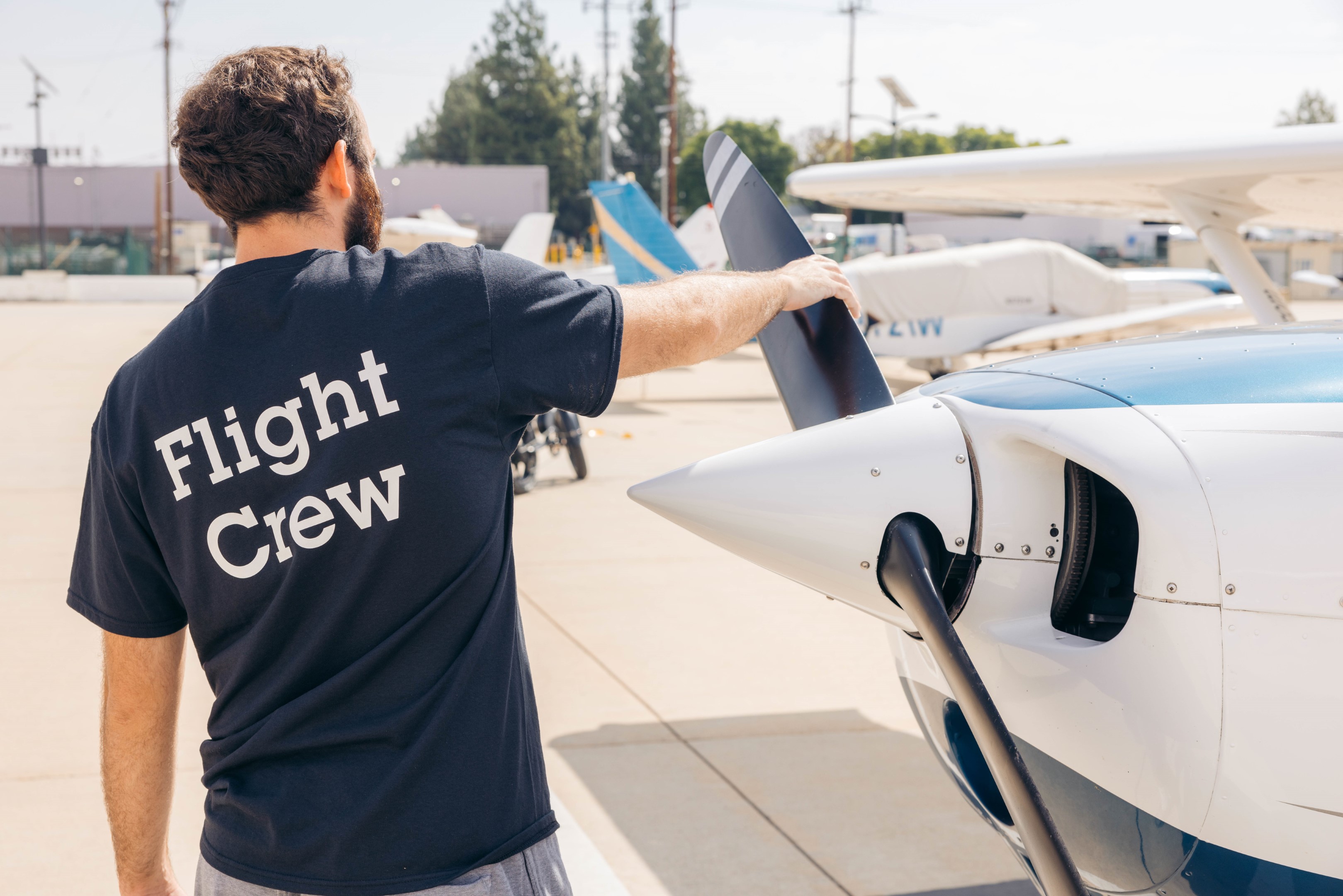
Your second walkaround is the first thing that changes
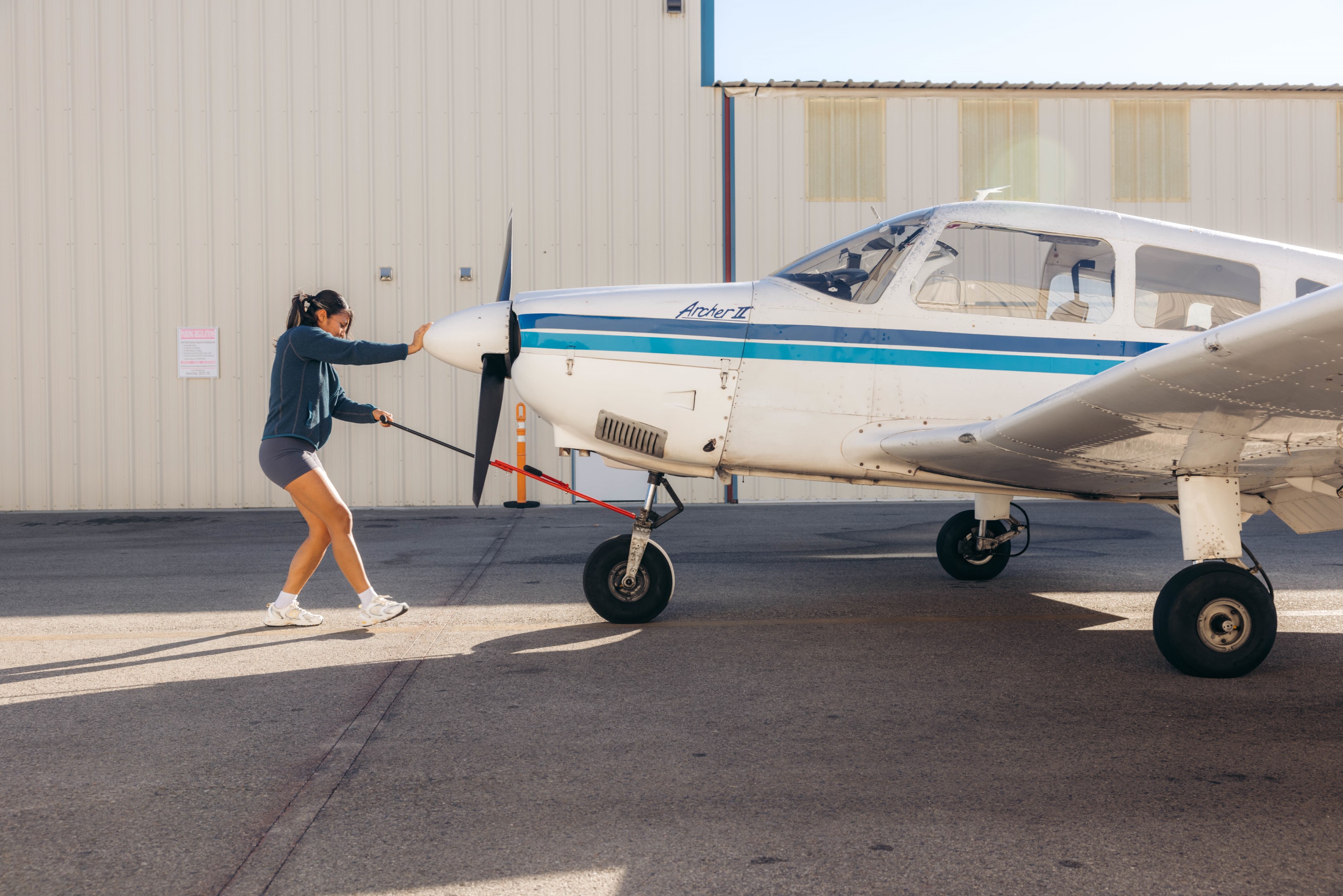
On your Discovery Flight, the walkaround was a tour. In your first real lesson, the preflight inspection becomes your job. You check fuel quantity and quality, oil, control surfaces, tires, and the small details that tell a pilot whether an airplane is ready to fly. Your instructor watches, prompts, and explains why each item matters.
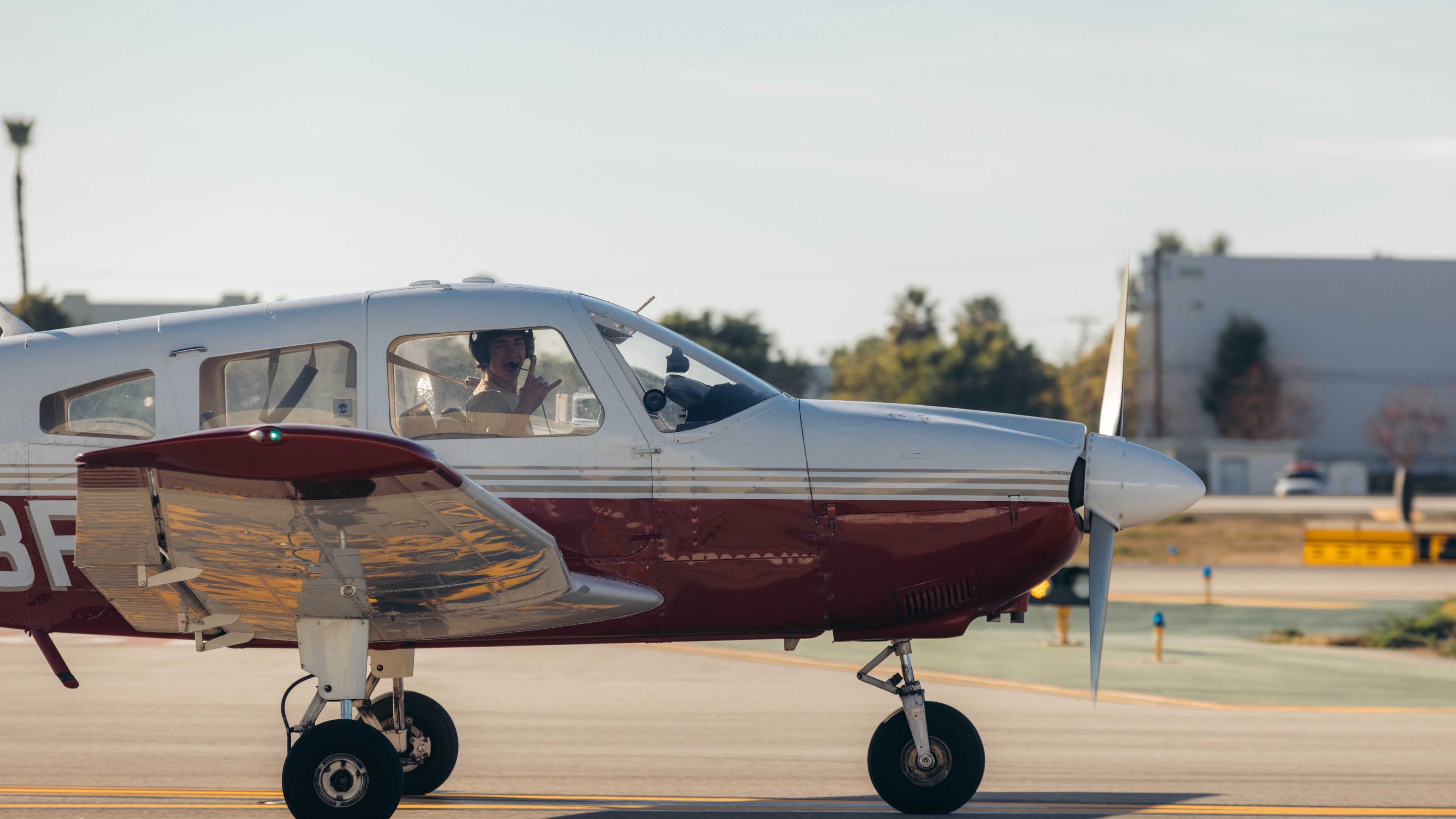
This is also where you meet your training aircraft properly. Here at LA Flight Academy, beginners typically train in a Cessna 172 or Piper Archer, both stable, forgiving airplanes designed for exactly this stage. You learn where the checklist lives, how to read the fuel gauges against a visual check, and how to start the engine with the same sequence every time. You can see the full lineup of our training fleet, and our Private Pilot course explains how these early lessons fit into the full program.
The lesson ends with a debrief, just like the Discovery Flight did. Write down what your instructor says. Those notes become your study list for the week.
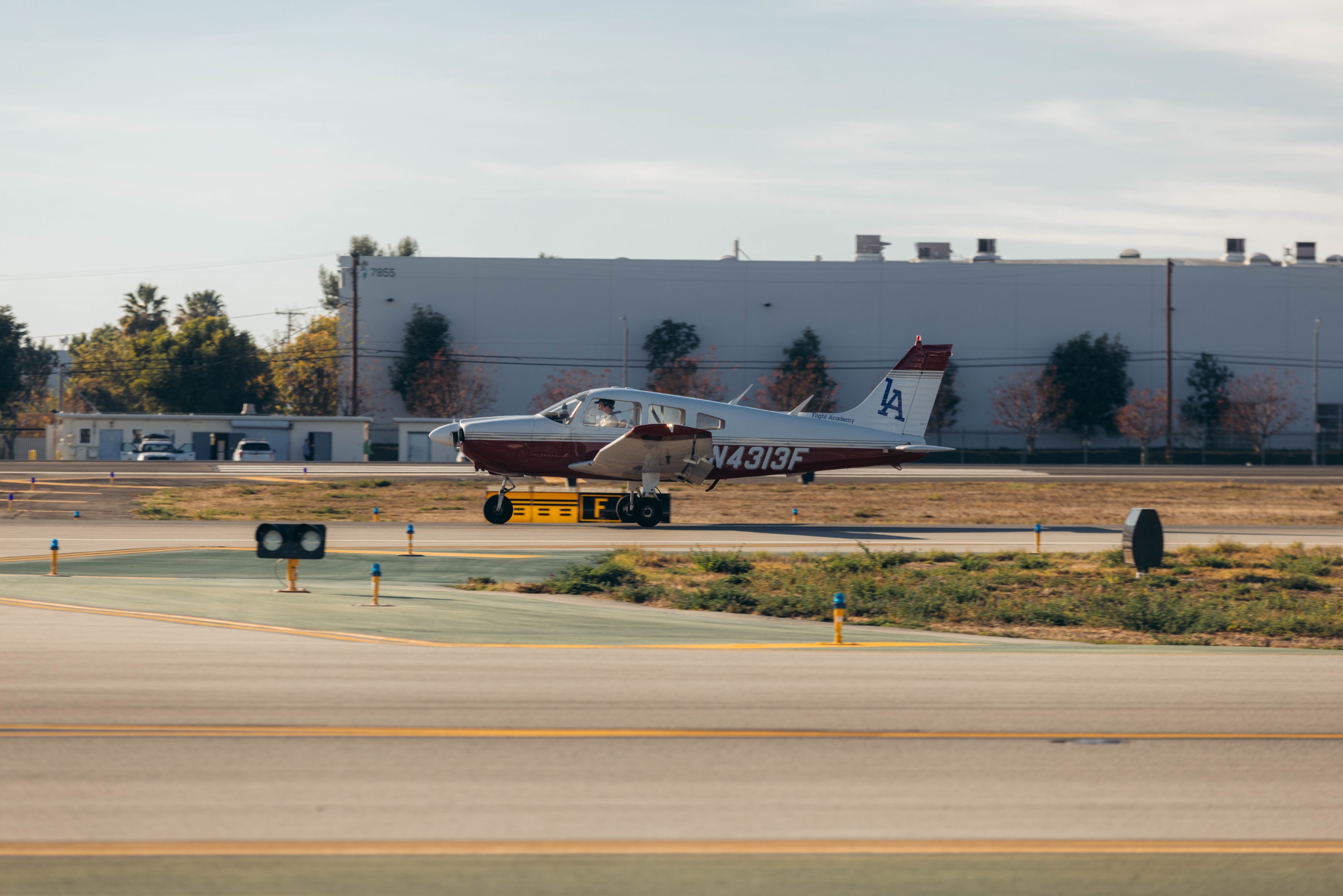
Taxi and radio work start early because Van Nuys is a towered airport
Before every flight at Van Nuys you talk to ground control, and before every takeoff you talk to the tower. So radio work begins in your first hours. It sounds intimidating. In practice you rehearse it on the ground first.
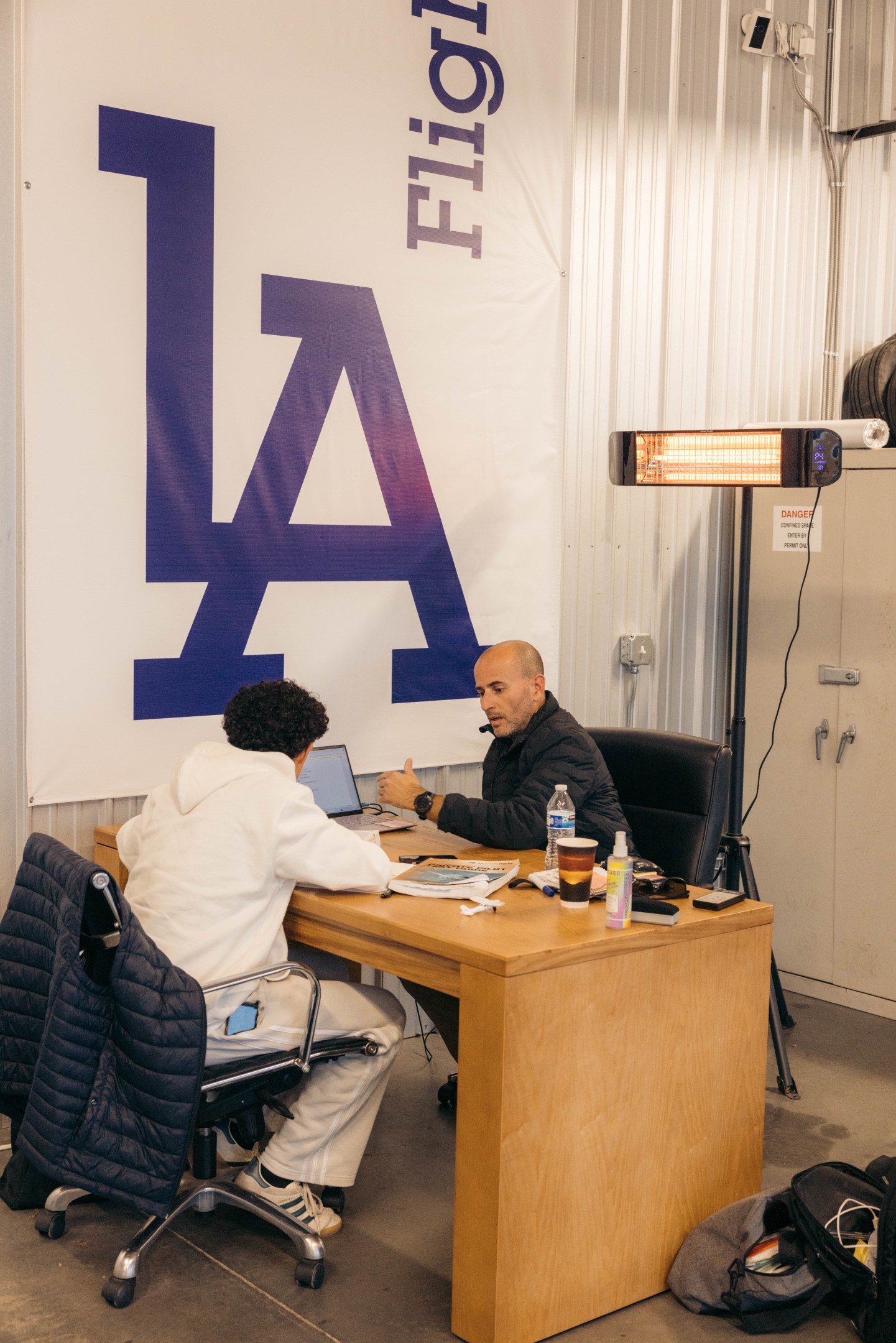
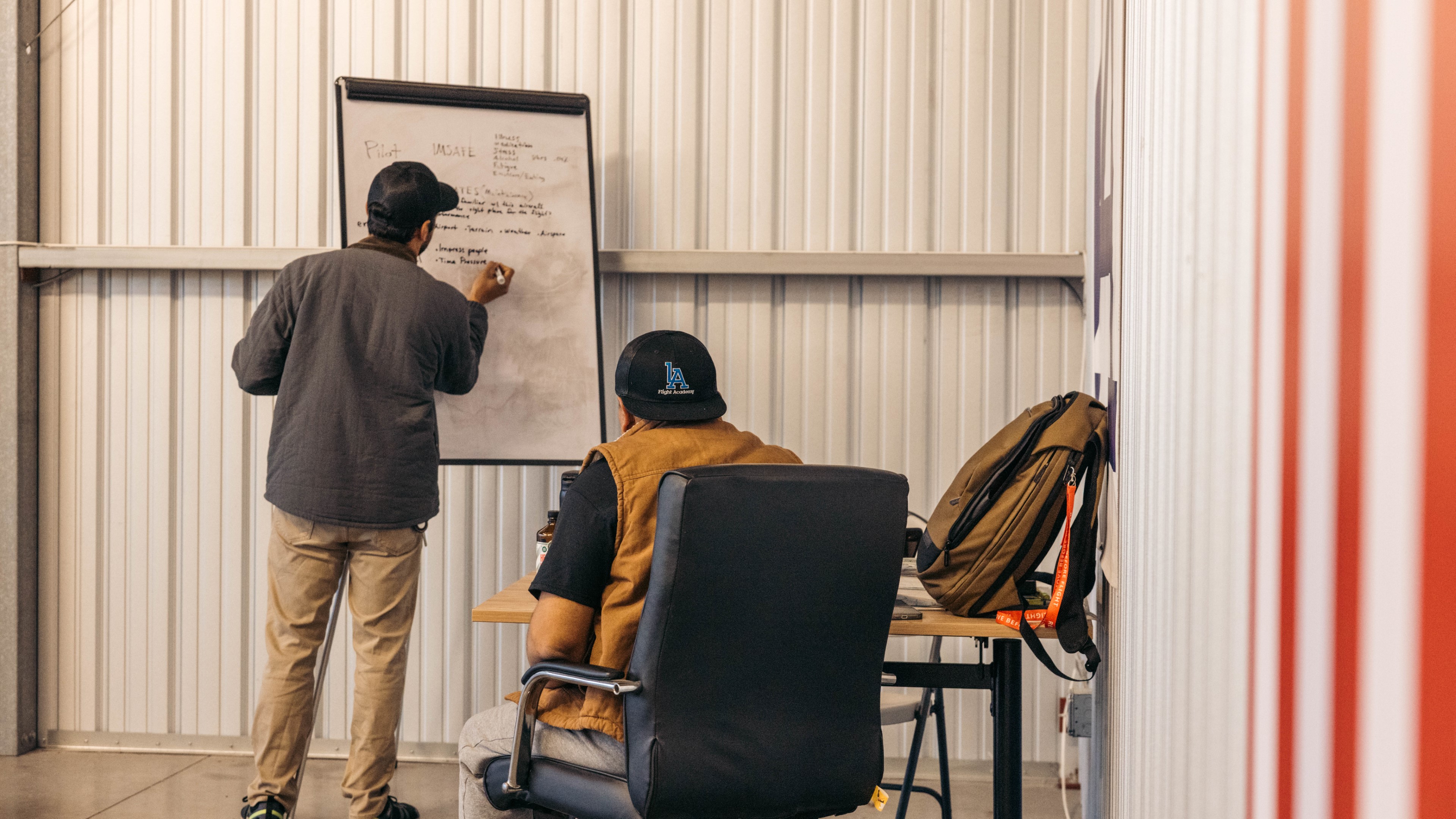
In the briefing room, your instructor walks through the likely call: who you are calling, who you are, where you are, and what you want. You say it out loud before you ever key the microphone. Then in the airplane, your instructor makes the calls you are not ready for and hands you the ones you are. Ground control comes to you around lesson two, the tower around lesson four or five, and full radio work whenever you are ready.
Taxiing follows the same pattern. The airplane steers with your feet, which feels strange for about two lessons and then feels normal. You learn to follow taxiway signs and hold-short lines while listening for your call sign. Our guide to navigating Van Nuys airspace explains the airport layout you will be learning by heart.
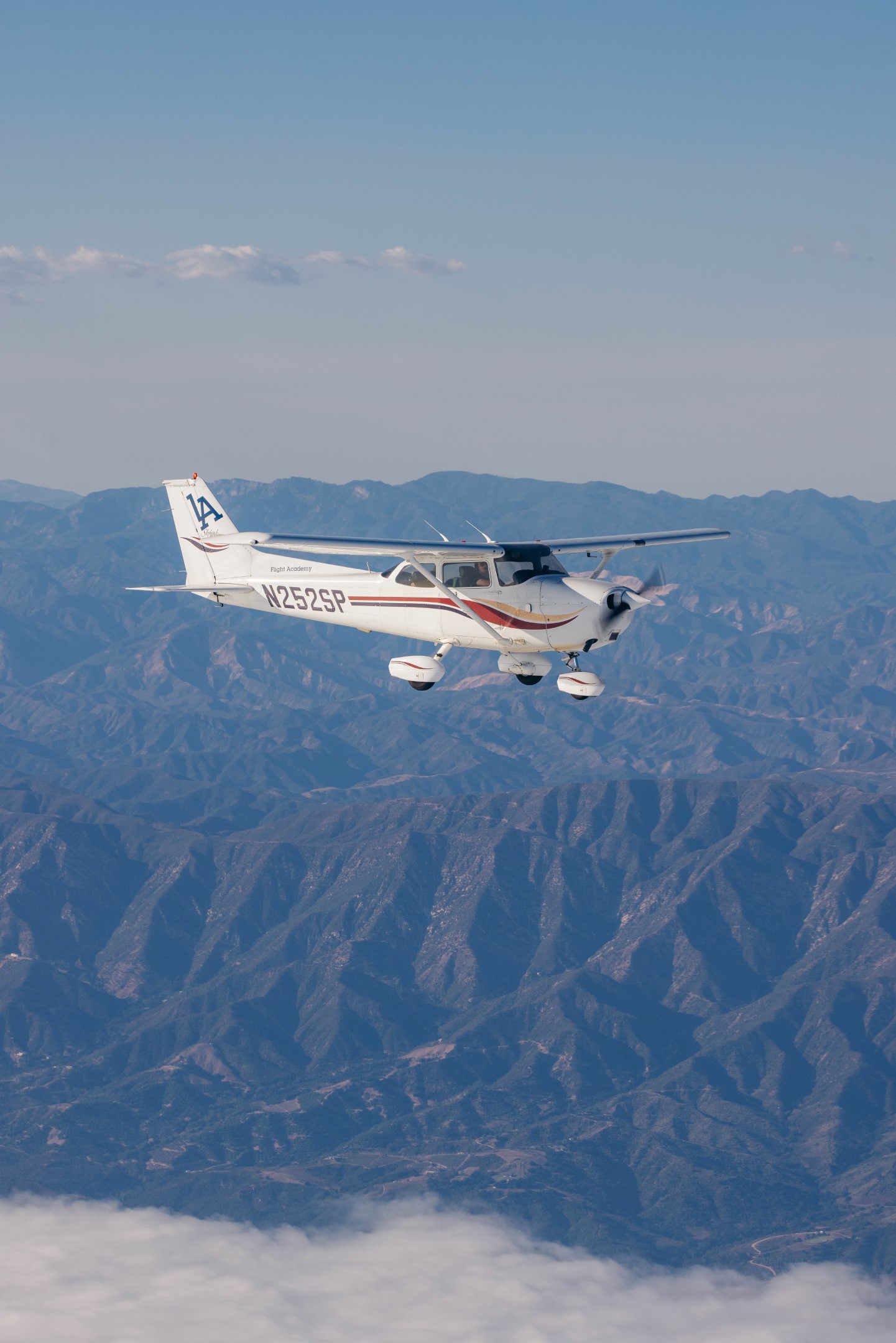
The four fundamentals fill most of your early flight time
Once you are airborne and clear of the airport, the real work of the first ten hours begins: straight-and-level flight, climbs, descents, and turns. Pilots call these the four fundamentals because every other maneuver is built from them. A traffic pattern is climbs, turns, and descents. A landing is a descent that ends in level flight a few inches above the runway.
Your instructor introduces each one with a demonstration, then hands you the controls. The goal is to hold an altitude, a heading, and an airspeed at the same time while your eyes stay outside the cockpit scanning for traffic. Early on you will chase the instruments. By hour five or six, most students hold altitude within a comfortable margin while talking.
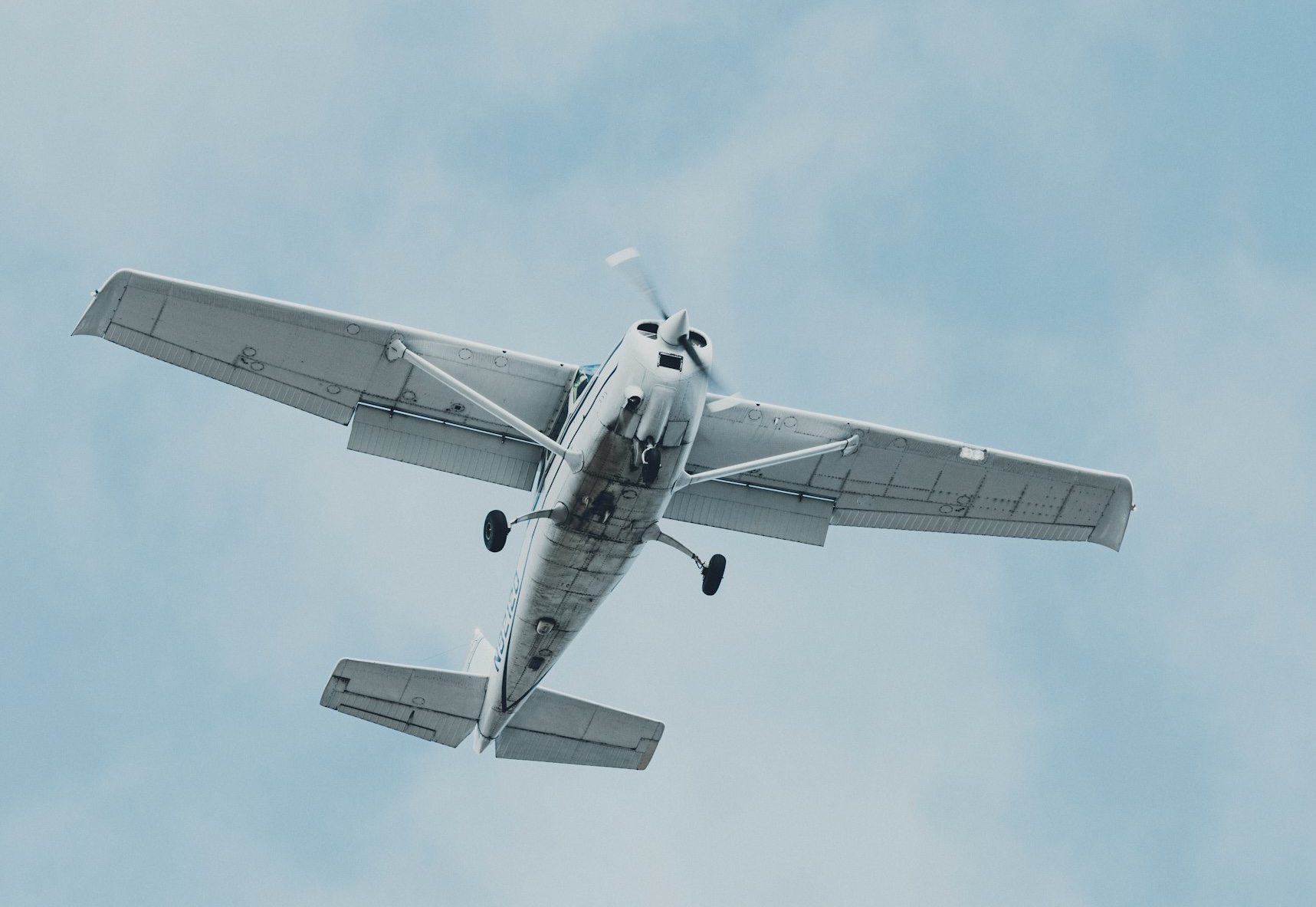
Then come slow flight and stalls. Slow flight teaches you what the airplane feels like near its minimum speed. A stall is the moment the wing stops producing enough lift, and stall recovery is a practiced, predictable procedure. The first one gets your attention. By the third repetition it feels routine. Our post on how airplanes create lift gives the aerodynamics behind what you feel in the seat.
Ground reference maneuvers and the pattern turn skills into landings
After the fundamentals, your instructor takes you lower to fly ground reference maneuvers: turns around a point, S-turns across a road, rectangular courses. They teach you to correct for wind while holding a precise path over the ground, which is what a traffic pattern demands.
That brings you to pattern work, the phase that dominates the end of your first ten hours and the beginning of the next ten. You fly a rectangular circuit around the runway: takeoff, climb, crosswind turn, downwind leg, base, final, landing. Then you do it again. Landings come together through repetition, and each one gives your instructor something specific to correct in the next.
All of this connects to ground school. Our ground training covers aerodynamics, weather, navigation, and regulations alongside your flights, so the maneuvers make sense before you fly them. We also have a Gleim BATD simulator where you rehearse procedures on the ground, at a fraction of the cost of airplane time. Reviewing the Van Nuys training environment ahead of your lessons helps too.
What a typical first-ten-hours sequence looks like
Every student is different, so treat this as a shape rather than a schedule. Your instructor adjusts the order and repetition to your progress.
| Stage | What you practice | What it sets up |
|---|---|---|
| Lessons 1 to 2 | Preflight, engine start, taxi, ground control calls, straight-and-level flight | Ownership of the airplane on the ground |
| Lessons 3 to 5 | Climbs, descents, turns, tower calls, first traffic pattern exposure | Holding altitude and heading while communicating |
| Lessons 5 to 8 | Slow flight, stalls, ground reference maneuvers, emergency procedures | Confidence at the edges of the envelope |
| Lessons 8 to 10 | Pattern work, landings, go-arounds | The path toward solo readiness |
Under Part 61, the FAA minimum for a Private Pilot airplane certificate is 40 hours of flight time, including at least 20 hours of dual instruction. Those are floors, not typical totals, and your first ten hours are the foundation the rest builds on. Our post on how many hours the certificate takes gives the full picture, including budgeting and financing considerations.
Solo is the milestone the first ten hours point toward
Your first ten hours do not end with solo flight for most students, and they are not supposed to. They end with the skills solo requires taking shape: consistent landings, calm radio work, and the judgment to go around when an approach is not right.
Before you fly alone, the FAA requires a student pilot certificate, a medical certificate, training in a specific list of maneuvers, a pre-solo written test given by your instructor, and endorsements in your logbook. Your instructor decides when you are ready based on what they see in the pattern. Since the medical is needed before solo, we recommend scheduling your exam with an Aviation Medical Examiner during these early lessons rather than after.
The next post in this series, Private Pilot milestones from first lesson to checkride, walks through solo, cross-country, the knowledge test, and the checkride in order.
Frequently asked questions
How soon after a Discovery Flight should I start lessons?
Soon enough that the feel of the controls is still fresh. Many students book their first lesson within a week or two. Contact us to talk through current instructor and aircraft scheduling.
Do I need a student pilot certificate to start lessons?
No. You can begin dual instruction without one. You need the certificate, along with a medical, before your first solo flight.
Will I really talk on the radio in my first few lessons?
Yes, in stages. You rehearse calls on the ground first, then take over ground control and tower calls as you are ready while your instructor covers the rest.
Which airplane will I train in?
Beginners at LA Flight Academy typically fly a Cessna 172 or Piper Archer. Both are common primary trainers with predictable handling. Our fleet page has the details on each aircraft.
How often should I fly during the first ten hours?
Many instructors suggest two or three lessons a week so each flight builds on the last. Your pace also depends on your schedule and budget, and our financing information can help you plan a steady rhythm.
What should I study between lessons?
Your debrief notes, the next maneuver in your syllabus, and the radio calls you will make next time. Chair-flying the pattern at home saves airplane time.
Turn your first flight into your first lesson
The Discovery Flight showed you the view. The next ten hours teach you to fly the airplane that gets you there. Preflight, taxi, radio, fundamentals, maneuvers, and pattern work all follow a sequence your instructor has taught many times before.
Explore the Private Pilot course at LA Flight Academy to see how these early lessons lead to your certificate, and contact us when you are ready to book lesson one.