Private Pilot Milestones: From First Lesson to Checkride
Published by:
Anthony N.
Published on:
Updated on:
Read time:
9 min read
Somewhere around your tenth lesson, your instructor climbs out of the airplane on the ramp, closes the door, and tells you to fly three trips around the pattern alone. That is first solo, and it is the milestone every student pilot talks about. It is also only one of six.
If you are working toward a Private Pilot certificate, or deciding whether to start, it helps to see the whole sequence at once: student pilot certificate and medical, first solo, solo cross-country, FAA knowledge test, checkride, and finally the certificate itself. At LA Flight Academy, we plan training around these milestones because each one has specific requirements and each one unlocks the next. This post walks through them in order. If you are earlier in the process, start with what happens after your Discovery Flight, the previous post in this series.
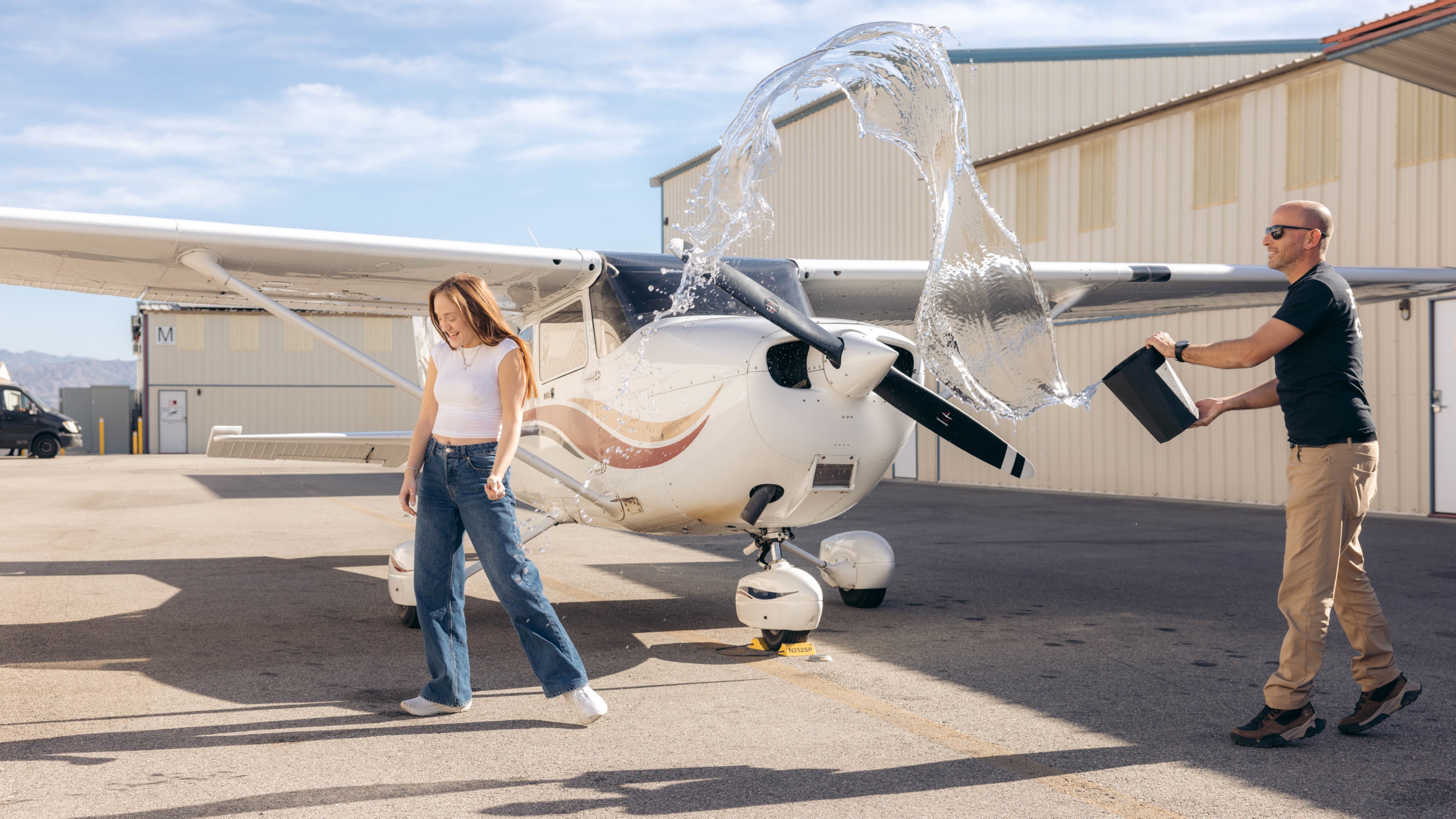
Milestone 1
The student pilot certificate and medical open the door to solo
Your first lessons need no paperwork at all. The first milestone is the paperwork that makes solo flight legal: a student pilot certificate and a medical certificate.
The student pilot certificate is applied for through the FAA with your instructor’s help. For airplanes, you must be at least 16 and able to read, speak, write, and understand English. The FAA student pilot page explains the application, and it usually takes a few weeks to arrive, so we start it early.
The medical certificate comes from an FAA-designated Aviation Medical Examiner. Most airplane students need at least a third-class medical before solo. Schedule the exam in your first month so it never becomes the thing standing between you and the pattern. Any health question belongs with the AME, and our beginner guide covers where this step fits in the broader path.
Milestone 2
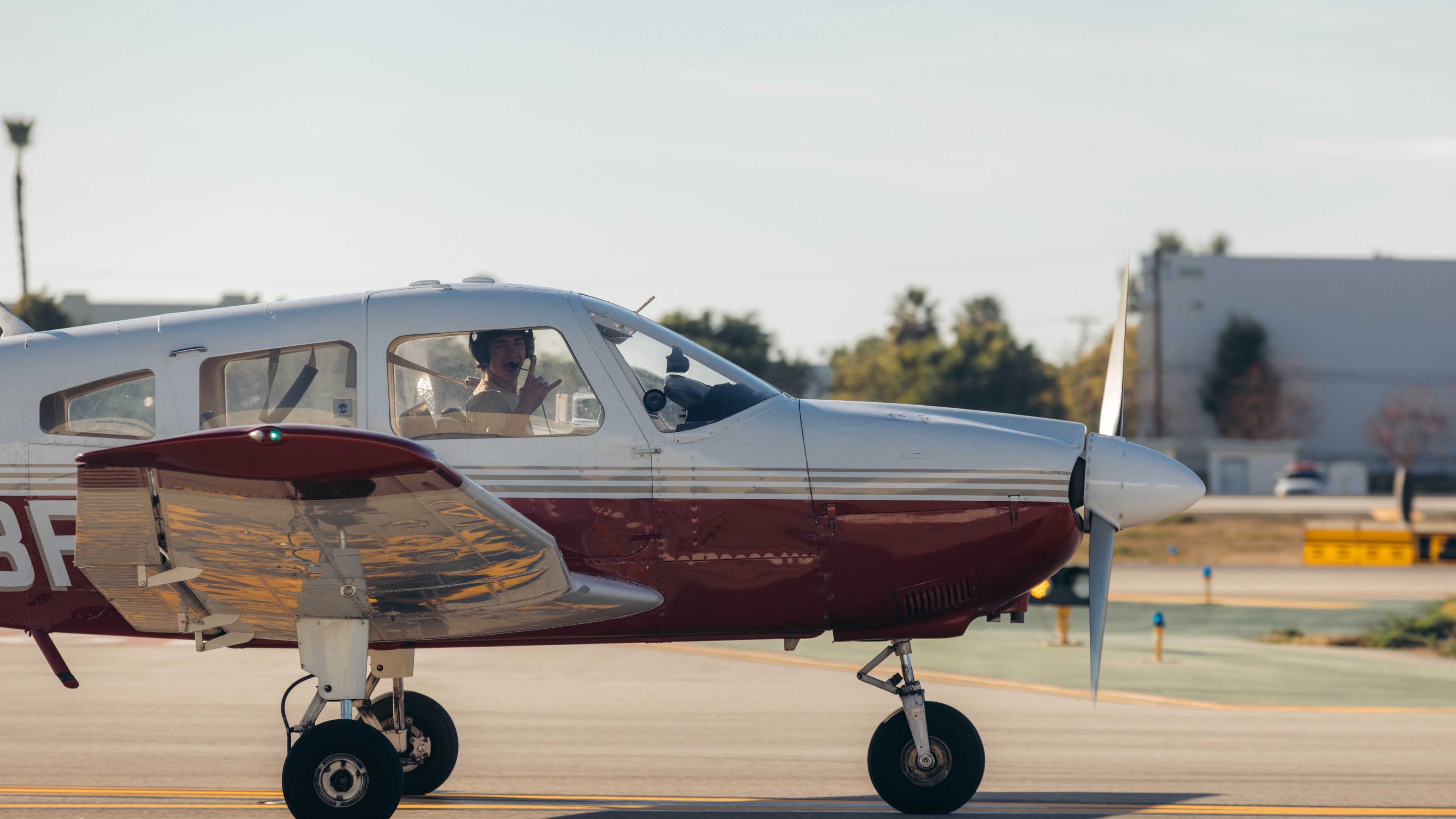
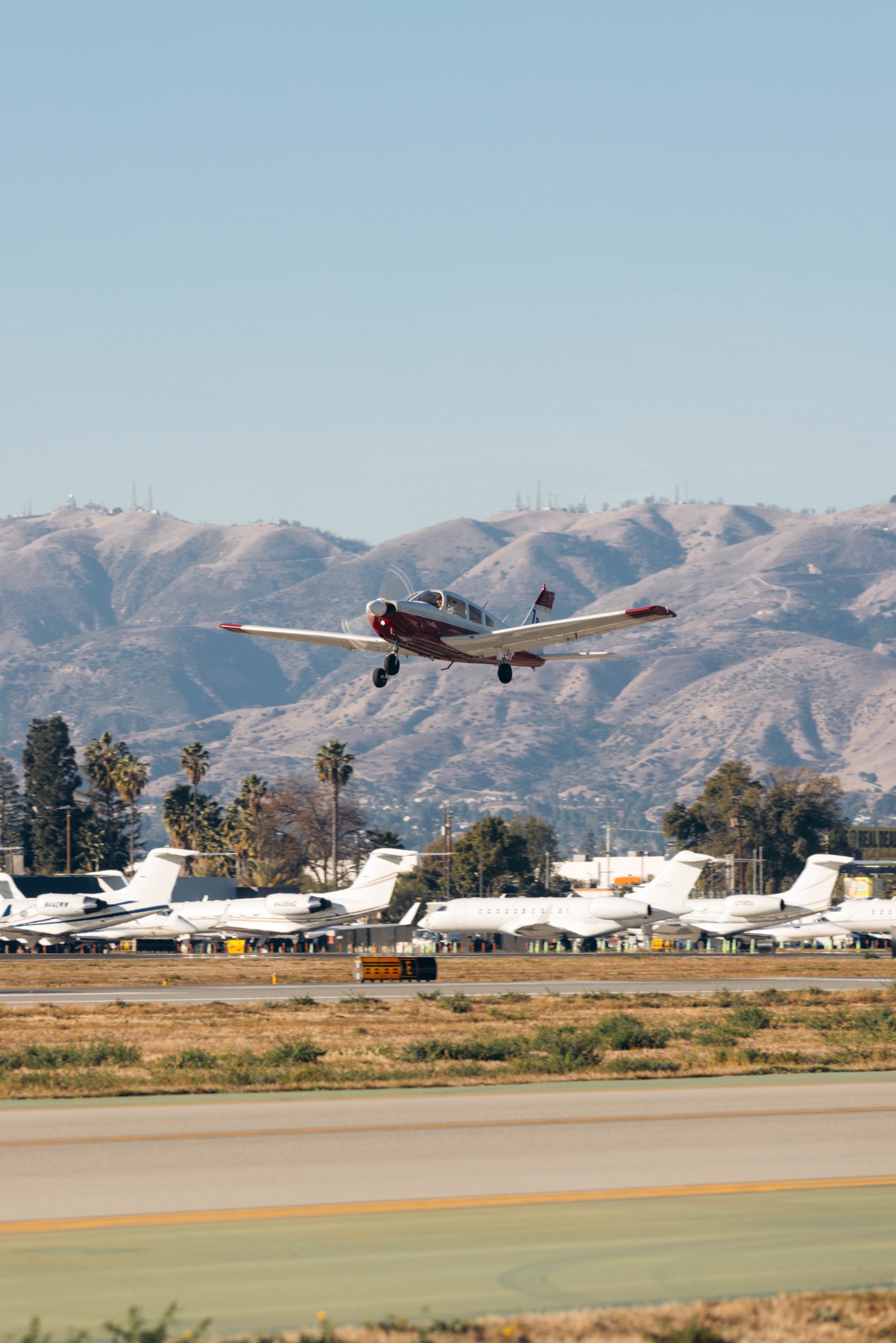
First solo is earned in the pattern
First solo is the day you fly the airplane with the right seat empty. Before that day, the FAA requires training in a specific list of maneuvers and procedures, a pre-solo written test your instructor gives you, and endorsements in your logbook and on your student certificate. Those endorsements are your instructor’s written statement that you can safely handle the airplane on your own at that airport.
What that looks like in practice: consistent landings, calm radio calls to the Van Nuys tower, and good go-around decisions when an approach is not working. Your instructor watches for those in every pattern session. When they see them reliably, they step out.
The solo itself is usually short, often a few takeoffs and landings while your instructor watches from the ramp. Students talk about the airplane climbing faster without a second person aboard for years afterward. If you want the training context that leads here, our post on flying out of Van Nuys as a student pilot describes the environment you will solo in.
Milestone 3
Solo cross-country turns you into a navigator
After solo, your training widens. Dual cross-country flights teach you to plan a route, read a sectional chart, talk to unfamiliar towers, and manage fuel and weather over distance. Then you do it alone.
Before each solo cross-country, your instructor reviews your flight plan and endorses that specific flight. The FAA sets minimums for this phase. Under Part 61, a Private Pilot airplane applicant needs at least 5 hours of solo cross-country time, including one flight of at least 150 nautical miles total with full-stop landings at three points and one leg of at least 50 nautical miles straight-line distance. That long solo cross-country is the milestone most students remember second only to first solo.
Night training happens in this phase too. You need at least 3 hours of night flight training with an instructor, including a night cross-country over 100 nautical miles and ten night takeoffs and landings to a full stop. Los Angeles at night from a training aircraft is a memorable classroom. Our Private Pilot course builds these flights into the program sequence.
Milestone 4
The FAA knowledge test clears the way for the checkride
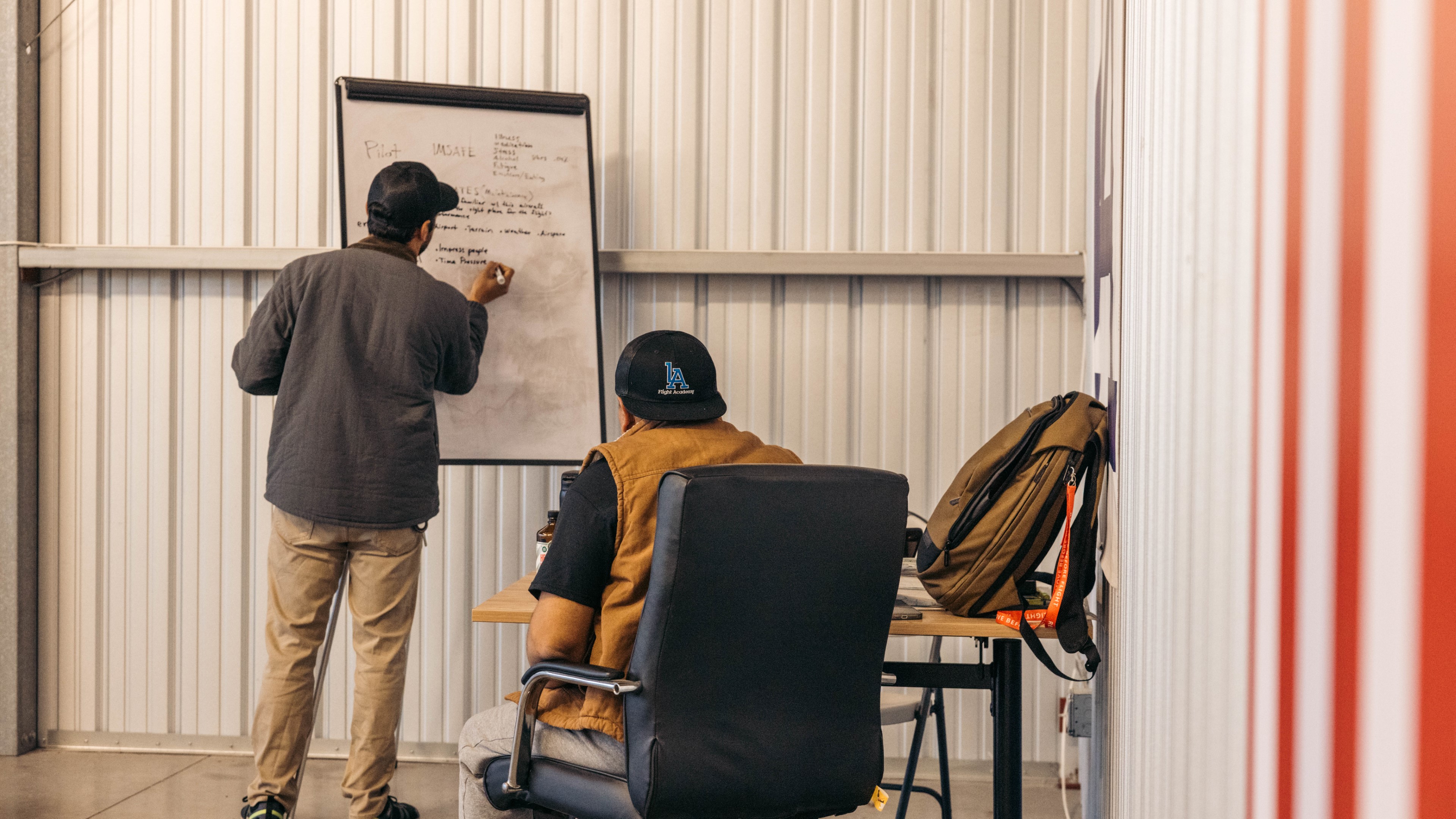
The knowledge test, often called the written, is a computer-based FAA exam on aerodynamics, weather, regulations, navigation, and airspace. You must pass it before the checkride, and you need an endorsement from your instructor or ground instructor to sit for it.
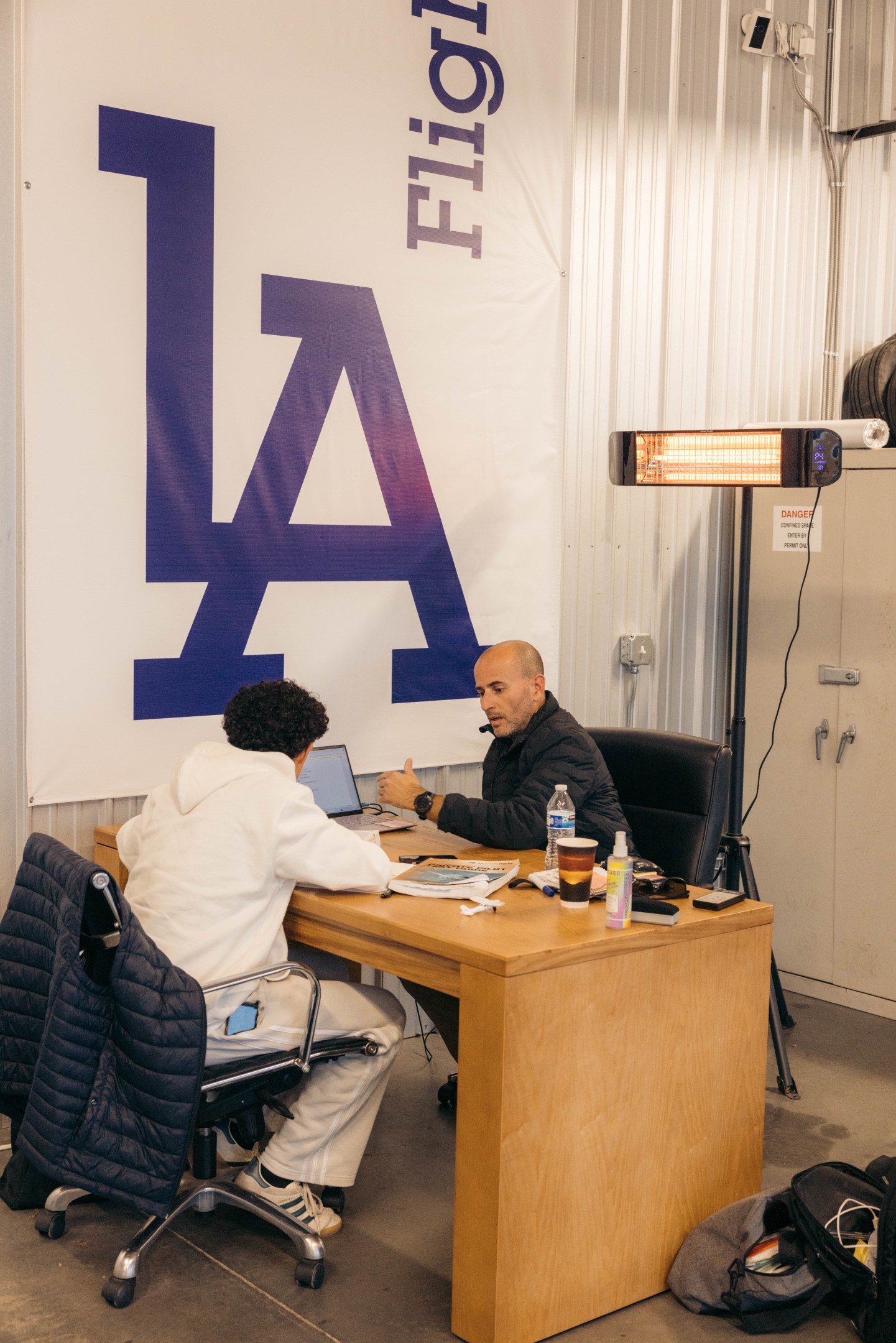
Many students take it around the time they start cross-country work, when the material is fresh and the flying makes it concrete. Finishing it early removes one source of pressure from the final phase. Our ground training covers the test material alongside your flights, and our post on preparing for the FAA Private Pilot written test walks through study strategy in detail.
Milestone 5
The checkride is a demonstration
The practical test, or checkride, is given by an FAA-designated pilot examiner. It has two parts: an oral exam at a table with charts and the airplane’s documents, and a flight where you demonstrate the maneuvers and procedures in the FAA Airman Certification Standards. The ACS is public, so you know exactly what will be evaluated.
Before you are eligible, you need the full list of aeronautical experience, the passed knowledge test, and your instructor’s endorsement stating you are prepared. That endorsement includes at least 3 hours of checkride preparation within the two calendar months before the test. Your instructor recommends you when they see you flying to standard consistently, and that is what sets the date.
Here at LA Flight Academy, we run mock checkrides so you experience the oral and flight portions with detailed feedback before the real one. Weak spots surface in a practice setting where they cost nothing but a debrief. Our post on aviation safety standards in training explains why that repetition matters.
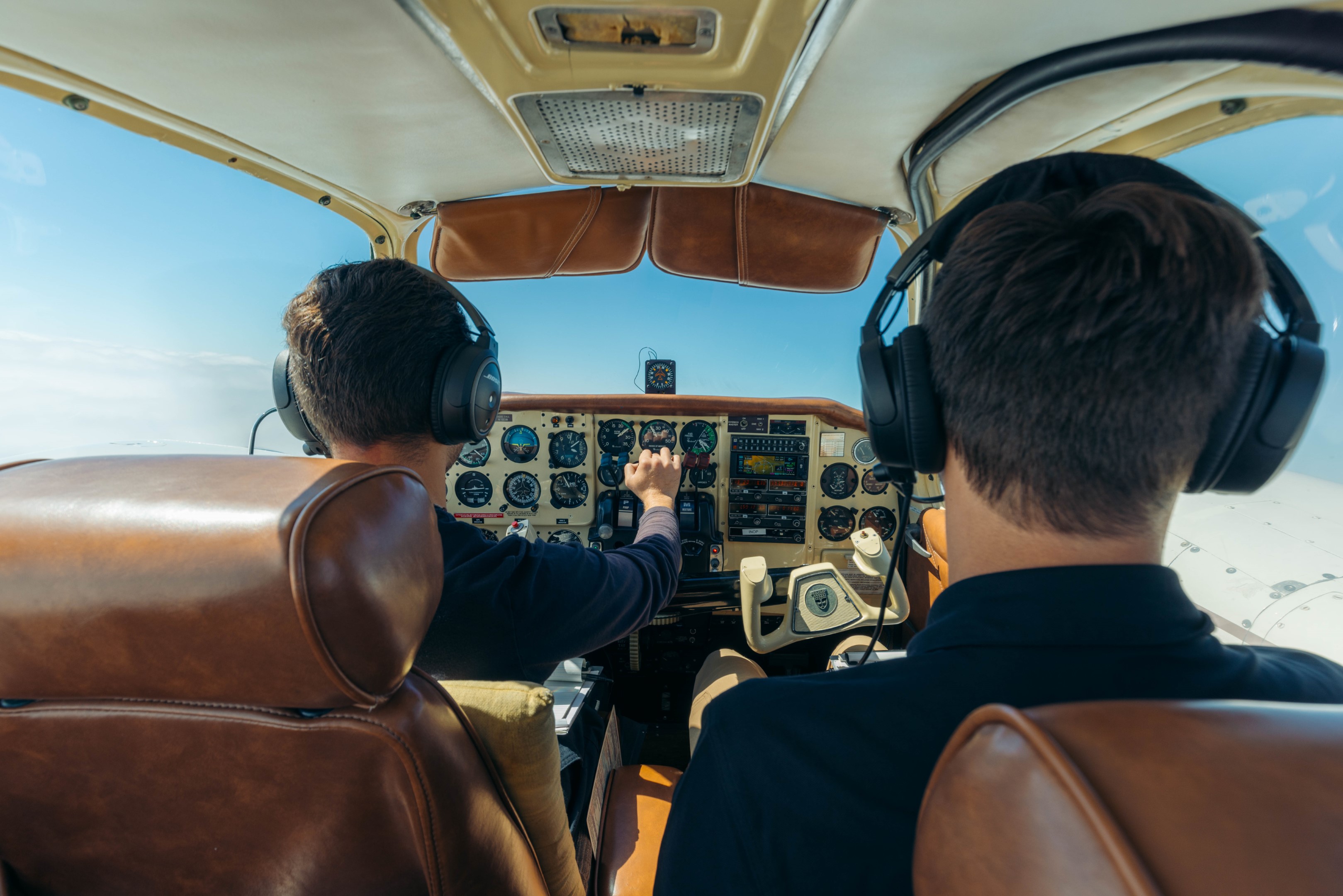
Milestone 6
The certificate and what it unlocks
Pass the checkride and you leave with a temporary Private Pilot certificate the same day. You can now act as pilot in command and carry passengers for non-commercial flying, subject to the aircraft ratings, currency requirements, and operating rules that apply.
For many students that is the goal: weekend flights along the coast, a lunch run to another airport, sharing the view with family. For others it is the foundation for an Instrument Rating and a Commercial Pilot certificate on a career path. Either way, you can also rent from our fleet after a checkout; our aircraft rental page explains how that works.
The milestones at a glance
The FAA sets minimums for each phase. Treat them as floors. The FAA itself notes that national completion often lands closer to 75 hours than the 40-hour minimum. Your actual total depends on lesson frequency, weather, and how quickly each skill settles in.
| Milestone | What it requires | What it unlocks |
|---|---|---|
| Student pilot certificate and medical | Age 16, English proficiency, AME exam | Eligibility to solo |
| First solo | Pre-solo training, instructor written test, endorsements | Solo practice in the pattern and local area |
| Solo cross-country | Dual cross-country training, per-flight endorsements, at least 5 solo cross-country hours including the 150 nm flight | Independent navigation between airports |
| FAA knowledge test | Ground training and instructor endorsement | Eligibility for the checkride |
| Checkride | At least 40 total hours under Part 61, night and instrument training, 3 hours of prep, instructor recommendation | The Private Pilot certificate |
| Private Pilot certificate | Passed practical test | Passengers, rental, and further ratings |
Planning the budget across these phases matters as much as planning the flights. Testing and checkride fees cluster near the end, so build for them early. We offer financing information for students who want to spread the cost, and our post on how many hours the certificate takes covers budgeting in depth.
Frequently asked questions
How long does it take to reach first solo?
There is no fixed number. Your instructor endorses you when your landings, radio work, and judgment are consistently safe. Flying two or three times a week helps most students get there sooner than a once-a-month pace.
Can I take the knowledge test before I solo?
Yes. The knowledge test can be taken any time after you receive the endorsement, and many students finish it early to lighten the final phase.
What happens if I do not pass the checkride?
The examiner issues a notice of disapproval listing the areas to retrain. You retrain those areas with your instructor and retest, usually on only the unsatisfactory items. Mock checkrides exist to make this rare.
Do I need my own airplane for the checkride?
No. You provide an airworthy aircraft with its documents, which for our students is one of our training aircraft. Our Private Pilot course includes the aircraft for training and testing arrangements.
Is the 40-hour minimum realistic?
It is the legal floor. The FAA notes the national average is closer to 75 hours. Consistency and preparation are the biggest levers you control.
What comes after the Private Pilot certificate?
Recreational flying, aircraft rental, or the next rating. Our pilot career path guide shows how the certificate fits into a professional track.
Start working toward your first milestone
Six milestones, each with a clear requirement and a clear reward. The first one is the only one you can start today.
Explore the Private Pilot course at LA Flight Academy to see how we sequence these milestones, then read your first 90 days of flight training for a plan that keeps momentum through all of them.