How Many Hours to Get Your Private Pilot License in 2026?
Published by:
Anthony N.
Published on:
Updated on:
Read time:
6 min read
If you have researched flight training, you have likely seen the number 40 hours advertised as the timeline for a Private Pilot License (PPL). But when you talk to real pilots, they often share stories of taking 60, 70, or even 80 flight hours before passing their practical test.
This gap between marketing claims and real-world results is one of the biggest sources of frustration for new student pilots. It leads to unexpected costs, budget shortages, and a feeling of stalled progress.
At LA Flight Academy, we believe in radical transparency. Understanding the actual hours and costs upfront lets you build a realistic training plan, protecting your budget and helping you cross the finish line faster. Here is a breakdown of the real numbers, what causes flight-hour inflation, and how you can actively keep your training efficient.
FAA Minimums vs. Real-World Averages
To understand the timeline, you must look at the regulatory rules. Under the FAA Part 61 rules, a student pilot must log at least 40 hours of flight time to be eligible for a Private Pilot Certificate. This minimum includes:
- At least 20 hours of flight training with an instructor (dual).
- At least 10 hours of solo flight time.
- Specific night flying, cross-country navigation, and instrument training.
While 40 hours is the legal minimum, the national average for completion is approximately 75 hours.
Very few students pass their checkride at the bare legal minimum. Achieving checkride readiness is not just about logging hours; it is about reaching a high standard of flight proficiency, situational awareness, and decision-making skill.
Why Training Hours Vary: The Los Angeles Factor
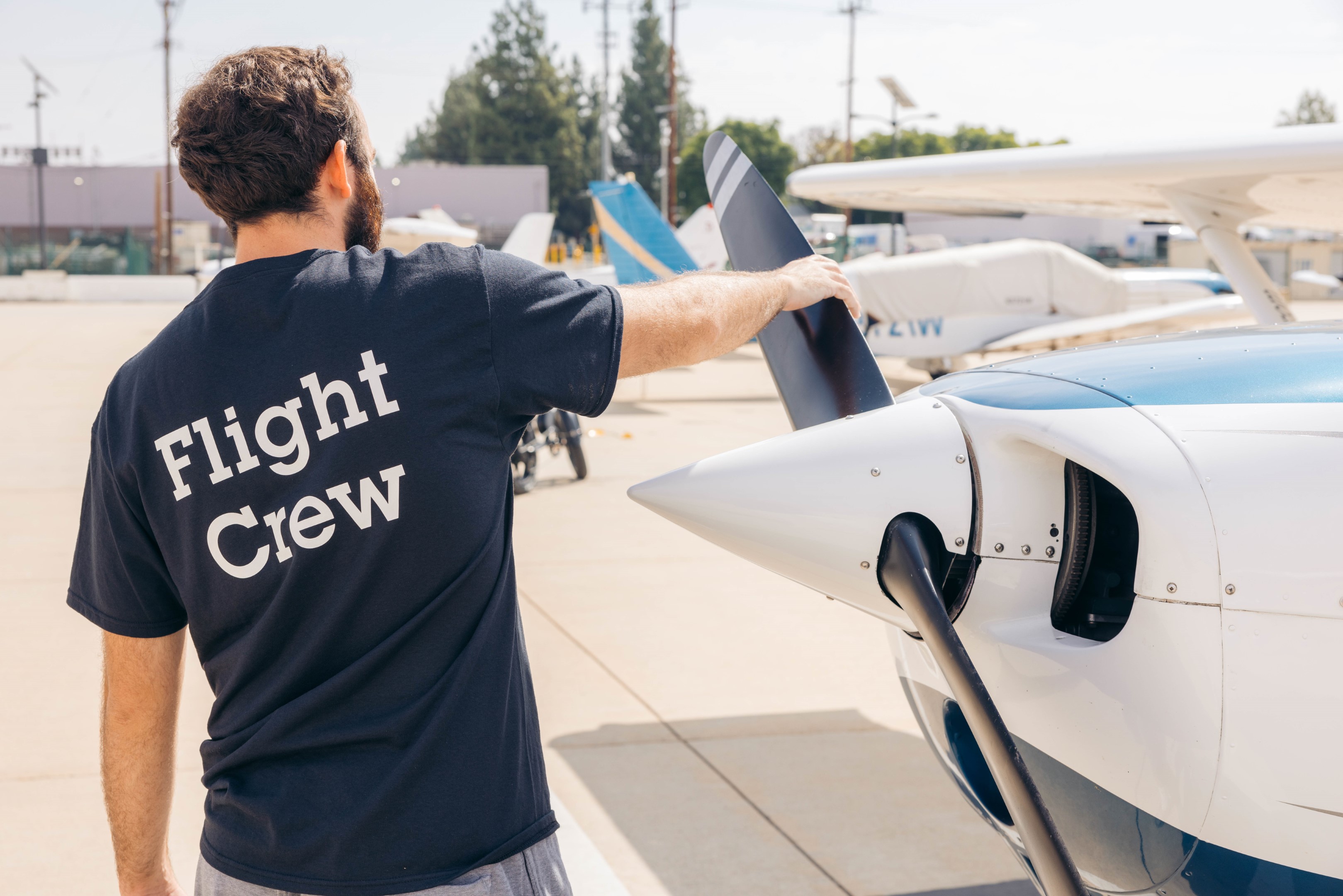
Your training environment plays a massive role in how many hours you will log. Operating out of Van Nuys Airport (VNY)—one of the busiest general aviation airports in the country—presents unique conditions:
- Airspace Complexity: Learning to navigate Class D airspace, communicate with Air Traffic Control (ATC), and share the sky with business jets requires intense focus. This workload adds a few hours of learning time upfront, but it pays off downstream. You build elite radio skills and confidence that quieter, rural airports simply cannot replicate.
- Taxi Times: Because VNY is a busy hub, taxiing to the runway and waiting for takeoff clearance can add decimal points to your engine logbook.
- Weather and Haze: While Southern California averages over 300 clear flying days per year, morning marine layer fog or afternoon summer smog can occasionally delay solo cross-country flights, stretching the calendar timeline.
Pacing Your License: A Realistic Budgeting Guide
Because flight training is billed on an hourly basis (aircraft rental plus instructor rate), your total cost is directly tied to your flight hours. A realistic budget should reflect the actual training averages, rather than standard FAA regulatory minimums.
Here is how the costs break down when planning your pilot training:
| Flight Milestone | FAA Part 61 Minimum | Real-World LA Average | How This Supports Your Next Step |
|---|---|---|---|
| Foundational Flight | 20 Dual Hours | 35–45 Dual Hours | Master steep turns, slow flight, and emergency landings. |
| Solo Practice | 10 Solo Hours | 15–20 Solo Hours | Build the command confidence needed to act as Pilot in Command. |
| Simulator Training | 0 Hours Required | 2.5 Simulator Hours | Log Private Pilot Course credits in our Gleim simulator. |
| Total Hours | 40 Hours | 60–75 Hours | Prepare for the FAA checkride with mock exams and feedback. |
3 Actionable Rules to Keep Your Training Hours Down
While flight hours vary, you are not powerless. Your study habits and training schedule have the biggest influence on your final timeline. By applying these three rules, you can protect your budget and finish closer to the minimums:
1. Fly at Least 2 to 3 Times per Week
Flight training is a physical and mental skill that requires muscle memory. If you fly only once a week (or once every two weeks), you will spend the first 30 minutes of every lesson relearning what you forgot. By scheduling consistent lessons, you maintain momentum, reduce skill regression, and finish in fewer total hours.
2. Maximize the Gleim BATD Simulator
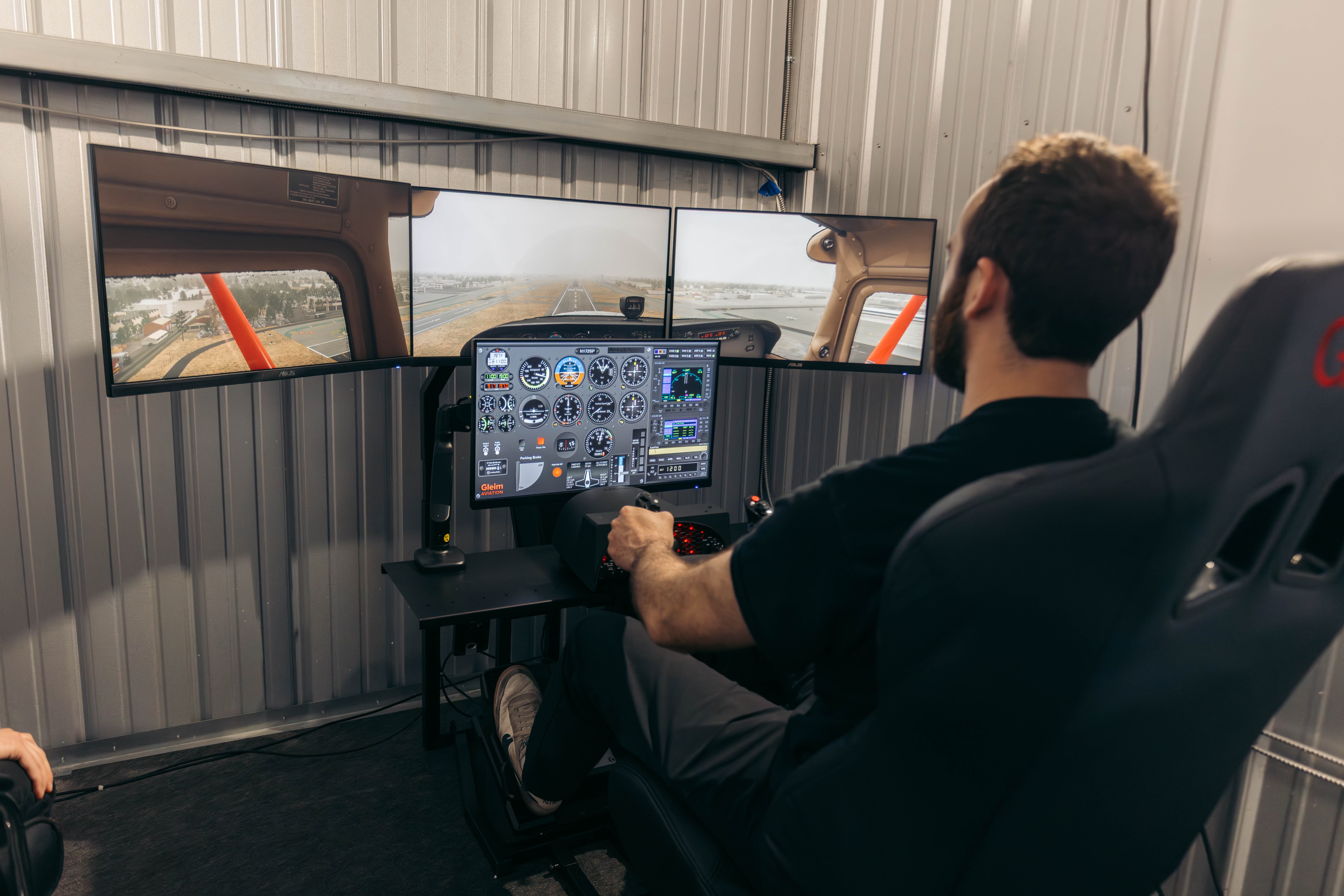
Do not spend expensive aircraft rental hours practicing basic instrument navigation or repeating radio procedures. Our FAA-approved Gleim BATD simulator lets you log up to 2.5 hours toward your Private Pilot Course requirements at a fraction of the cost of a real aircraft. It is the ultimate tool to practice emergency procedures and checkride maneuvers in a controlled, low-stress environment.
3. Finish Your Ground School Early
If you show up to a flight lesson without understanding the theory behind what you are doing, you will waste valuable flight time talking on the tarmac. Completing your FAA written test prep early ensures that your flight hours are spent practicing maneuvers, not discussing basic aerodynamics with the engine running.
Managing Your Investment with Flexible Financing
Even with efficient training, earning a pilot license is a significant financial step. We want to ensure that budget constraints do not halt your progress mid-way through training, which is one of the most common reasons students drop out.
To help you manage your cash flow, we offer modular pay-as-you-go billing. Additionally, flexible financing options are available to qualified applicants through our specialized aviation lenders, Stratus Financial and Flight Training Finance. These programs allow you to fund your training smoothly, ensuring you can maintain a consistent flying schedule and finish your certificate without financial interruptions.
Frequently Asked Questions
- Can I log simulator time toward my Private Pilot certificate?
Yes. Under FAA Part 61 rules, you can log up to 2.5 hours of training in an approved Basic Aviation Training Device (BATD) like our Gleim simulator, saving you significant aircraft rental costs. - Does training at a busy airport like VNY cost more?
While taxi times and traffic can add a few hours to your total training time, the experience is invaluable. You graduate as a highly competent pilot capable of flying into any major airspace in the country, a skill that quiet airports cannot provide. - What happens if I need more than 75 hours to finish?
Every pilot learns at a different pace. Our instructors provide detailed, transparent progress logs so you always know exactly what maneuvers need improvement. You fly until you are safe, proficient, and ready to pass your checkride. - Are books, headsets, and exams included in the hourly rates?
No. Hourly aircraft rental and instructor rates do not cover third-party costs like the FAA written test fee, the DPE checkride fee, renter’s insurance, or flight gear like headsets. We recommend budgeting an additional $1,500 to $2,000 for these supplies and exams.
Take the First Step with an Honest Budget
Aviation is one of the most rewarding skills you can master, but it requires an honest, realistic start. By building your plan around real averages rather than regulatory minimums, you protect yourself from cost surprises and set yourself up for training success.
If you are ready to explore flight training on a realistic timeline, scheduling an introductory flight lesson is the best way to start. You will get behind the controls, fly with an instructor, and discuss a personalized budget and schedule.
Book your Discovery Flight today and take the controls over Los Angeles. If you want to discuss pilot training costs, financing options, or schedule a tour of our facility, our team is ready to answer your questions.