Flight Training
FAQs & Resources
Have questions about starting your pilot training, ratings, costs, or scheduling? Explore our comprehensive FAQ guides and take the first step toward the skies with confidence.
Flying Lessons Van Nuys FAQs
Answers to the most common questions about taking flying lessons and pilot training at Van Nuys Airport (VNY) in Los Angeles.
Read FAQs
Multi-Engine Rating FAQs
Common questions about FAA multi-engine rating requirements, training timeline, costs, and career benefits at LA Flight Academy.
Read FAQs
FAQ's
All Frequently Asked Questions
Type keywords below to search our entire library of flight school and training questions.
Training at [Van Nuys Airport](/van-nuys-airport-flight-training/) exposes you to diverse traffic, professional flight operations, and complex airspace from day one. If you learn to fly and communicate with air traffic control at VNY, you will have the skills and confidence to operate at any airport in the country.
A standard training block is scheduled for 2 to 3 hours. This includes about 30 to 45 minutes of pre-flight briefing and aircraft inspection, 1.2 to 1.8 hours of actual flight time, and a post-flight debrief with your instructor to review your progress and logbook entries.
No, there are no landing fees or landing taxes for general aviation training aircraft at Van Nuys Airport. Your hourly aircraft rate and instructor fee cover all direct operations at the airport, so you will not face unexpected airport usage costs.
While VNY is busy, it is an excellent training environment. You will start with the basics in dedicated practice areas away from heavy traffic. As your skills grow, your instructor will guide you through tower communication and airspace entry. This gradual exposure helps eliminate radio anxiety and builds superior pilot capabilities.
Yes. Our fleet includes well-maintained Cessna 172s and Piper Archer aircraft. Most student pilots prefer the Cessna 172 for initial private pilot training due to its stable handling, while others choose the Piper Archer. You can discuss your preferences and career goals with your instructor to select the best trainer for you.
For the best training retention and cost efficiency, we recommend flying 2 to 3 times per week. Consistent flight schedules prevent you from spending expensive flight hours relearning skills, allowing you to progress quickly and complete your license with fewer total hours.
VNY is located in the heart of the San Fernando Valley. During training, you will enjoy scenic views of the Santa Monica Mountains, the Getty Center, the Hollywood Sign, the Malibu coastline, and the Pacific Ocean. These prominent visual references make learning pilot navigation intuitive and engaging.
The easiest way to start is by booking a Discovery Flight. You will take the controls with an FAA-certified instructor, fly over Los Angeles, and see if piloting is right for you. Afterward, we will help you secure your FAA medical certificate, register with the TSA (if applicable), and design a custom lesson schedule.
A [Multi-Engine Rating](/programs/multi-engine-rating/) is an FAA certification that allows you to act as pilot-in-command of an aircraft with more than one engine. It is an essential step for any pilot pursuing a career in commercial aviation, corporate charters, or cargo transport, as almost all airline and charter aircraft operate with multiple engines.
You must hold at least a valid Private Pilot License (PPL) or higher. You will also need a current FAA Medical Certificate. The training includes logging flight hours with an authorized instructor to master multi-engine aerodynamics, systems, and emergency procedures, followed by passing a practical checkride with an FAA examiner.
No, if you already hold an airplane single-engine rating (such as a Private Pilot or Commercial Pilot certificate), the FAA does not require a written knowledge test to add a multi-engine class rating. Your evaluation will consist of a combined oral and practical flight exam (checkride) with a Designated Pilot Examiner (DPE).
We offer an accelerated multi-engine rating program designed for maximum efficiency. Most of our full-time students complete their training and pass their checkride in just 1.5 weeks. Part-time students training around work or school schedules typically complete the program in 3 to 4 weeks.
Your primary training platform at LA Flight Academy is the Beechcraft 95-A55 Baron. Featuring twin engines with 260 horsepower each, it provides a high-performance, complex aircraft experience. This allows you to log multi-engine, complex, and high-performance endorsements simultaneously, saving you time and training costs.
Asymmetric thrust occurs when one engine in a multi-engine aircraft fails, causing the active engine to pull and yaw the aircraft toward the dead engine. Much of your training focuses on learning how to control the aircraft using rudder inputs, pitch control, and drag reduction techniques to ensure safe flight during single-engine operations.
Under the close supervision of your FAA-certified instructor, you will practice simulated engine failures at safe altitudes. You will learn to quickly identify the failed engine, verify it, feather the propeller to reduce drag, and perform emergency checklists. This builds the muscle memory and decision-making required to handle a real engine failure calmly and safely.
Yes. Through our partnerships with specialized aviation lenders Stratus Financial and Flight Training Finance, students can secure flexible loans covering the entire cost of their multi-engine rating. This helps you complete your career-track training without financial delays.
Take the First StepWith a Discovery Flight
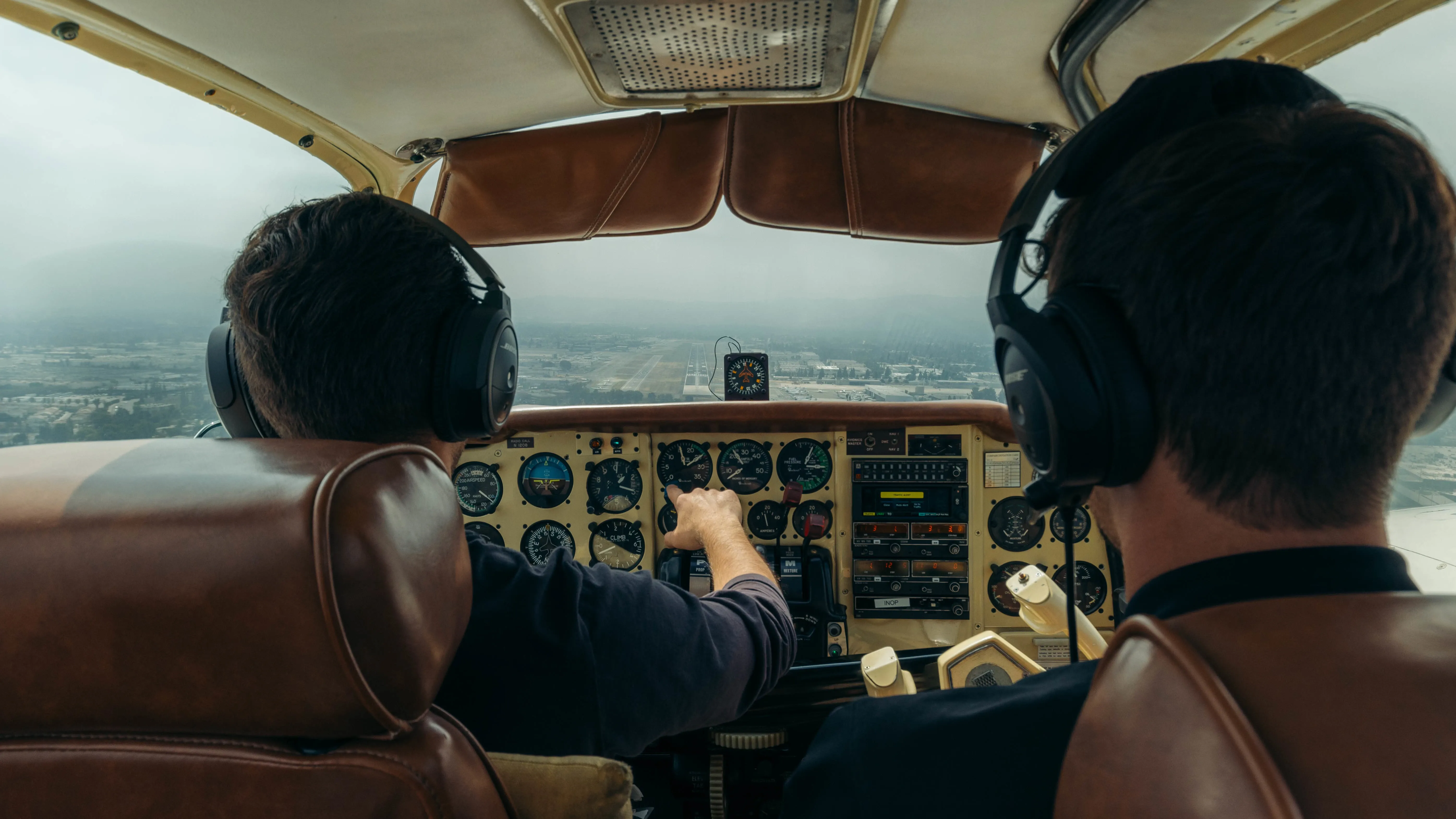
Experience the excitement of flying with a discovery flight at LA Flight Academy. Whether you're pursuing a passion or preparing for a professional aviation career, this is your chance to take control and explore the skies over Los Angeles and beyond. Book your discovery flight today and start your journey into aviation!